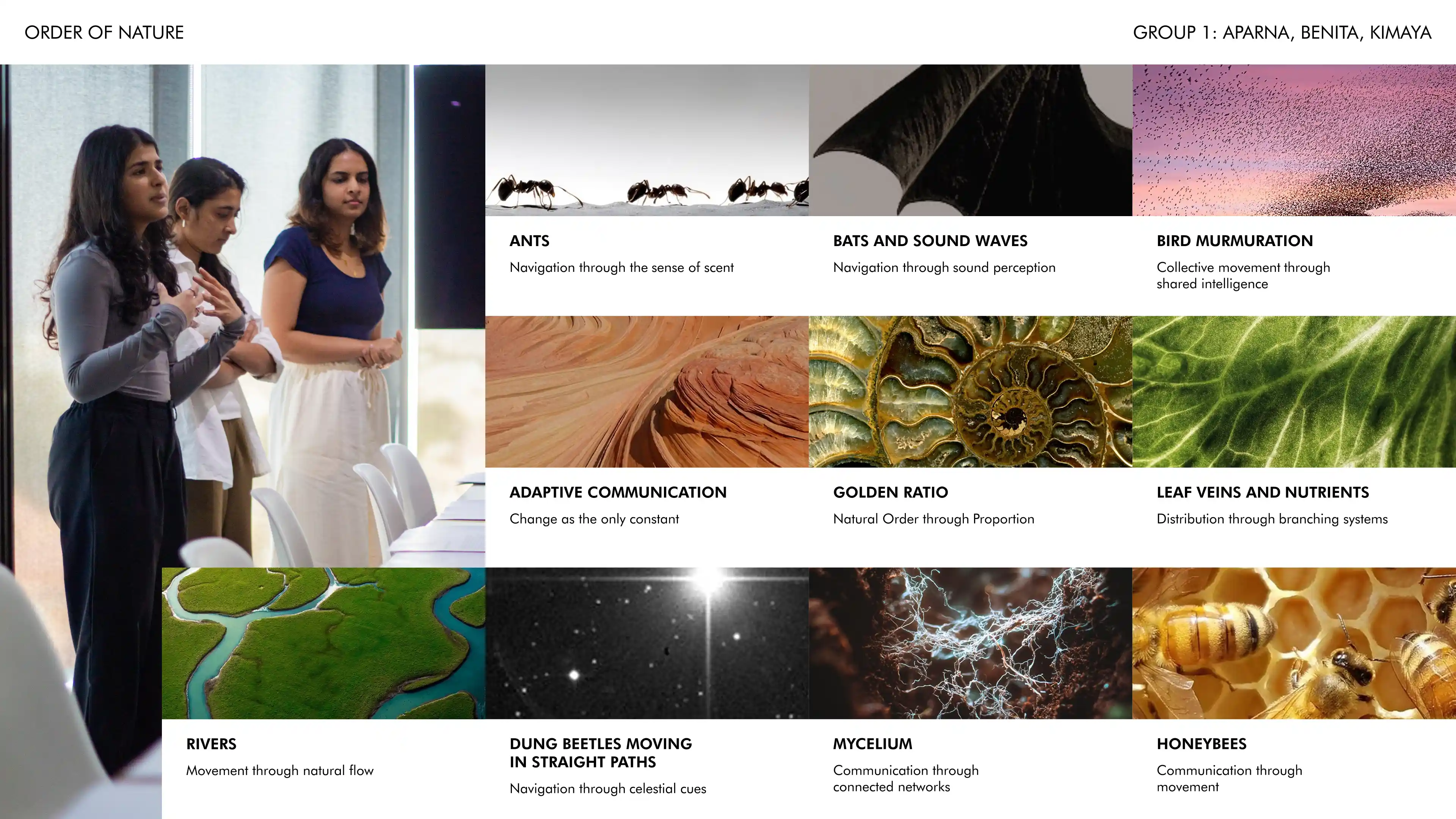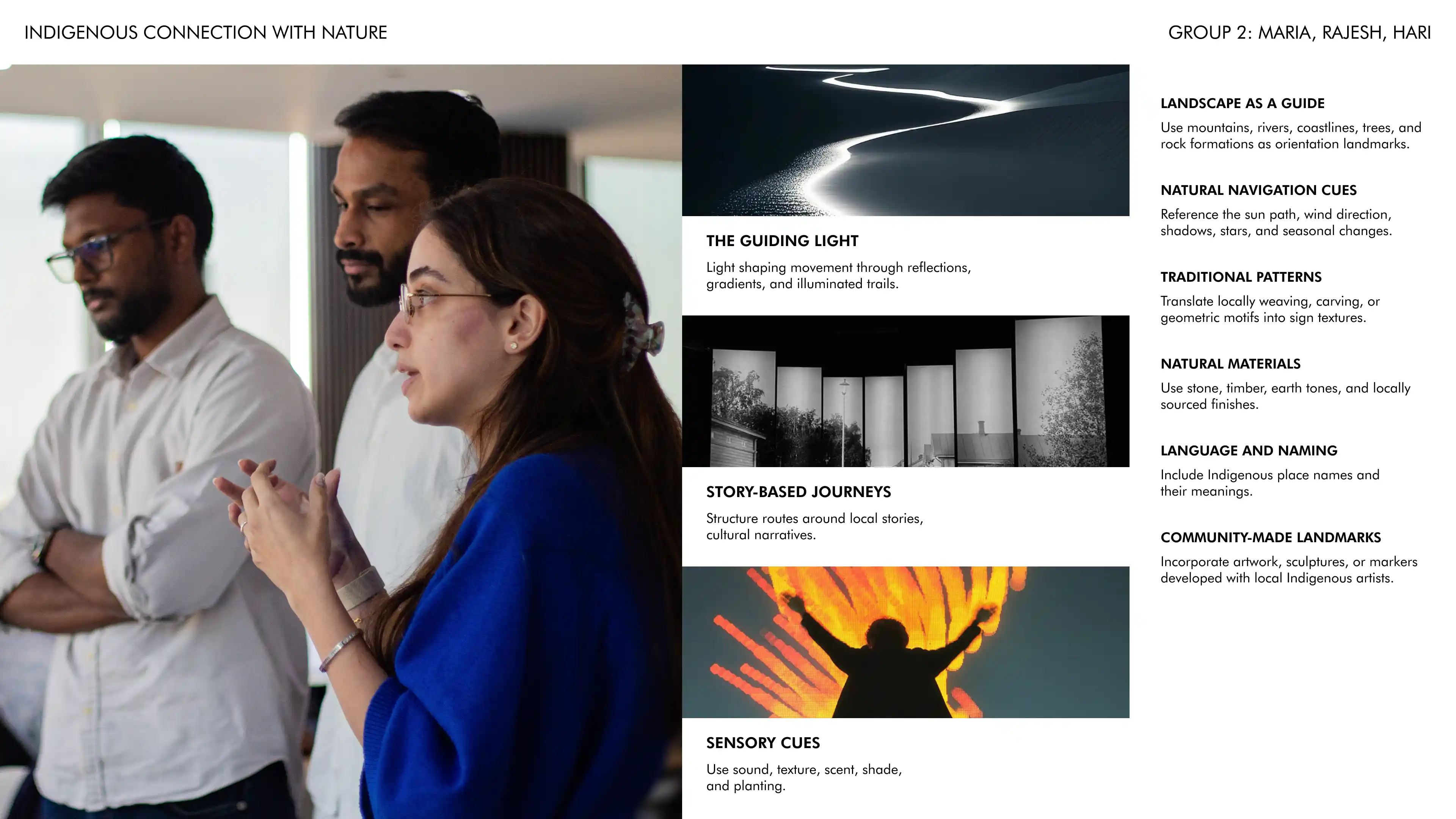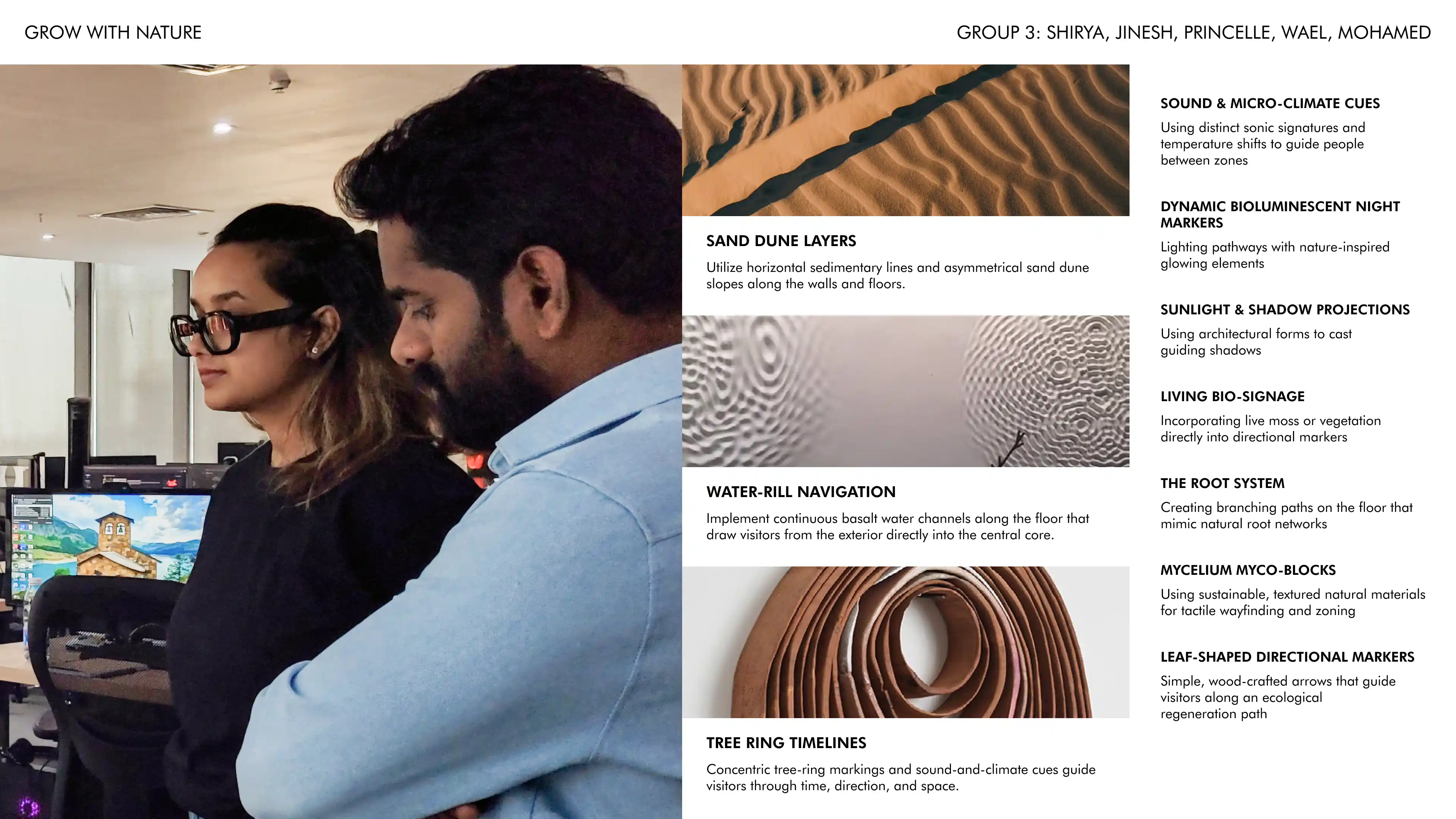



The visitor experience was structured around three interconnected themes: Order of Nature, Indigenous Connection with Nature, and Grow with Nature. Together, these explored humanity's relationship with the natural world; from understanding the inherent systems and patterns that shape nature, to learning from Indigenous knowledge, and ultimately reimagining how we can live and grow alongside the environment.
ORDER OF NATURE
Nature is a continuous cycle of sensing, adapting, and responding. Drawing inspiration from these processes, this direction explored how wayfinding could extend beyond conventional signage to become a more intuitive, sensory experience. By engaging human perception and environmental cues, navigation becomes a natural interaction with the surrounding space rather than a series of prescribed directions.
INDIGENOUS CONNECTION WITH NATURE
This direction looked to Indigenous knowledge systems, where the landscape itself becomes a guide. Landforms, vegetation, seasonal changes, materials, symbols, and local narratives informed a wayfinding approach rooted in place. Rather than simply directing movement, the system communicates cultural identity, environmental understanding, and a deeper respect for the land.
GROW WITH NATURE
Nature provides an intuitive model for how living systems navigate, adapt, and communicate. By referencing the continuous flows of water, energy, and ecological regeneration, the proposal envisioned navigation as a connected journey rather than a linear route, encouraging visitors to move through spaces in ways that reflect the rhythms and resilience of living ecosystems.
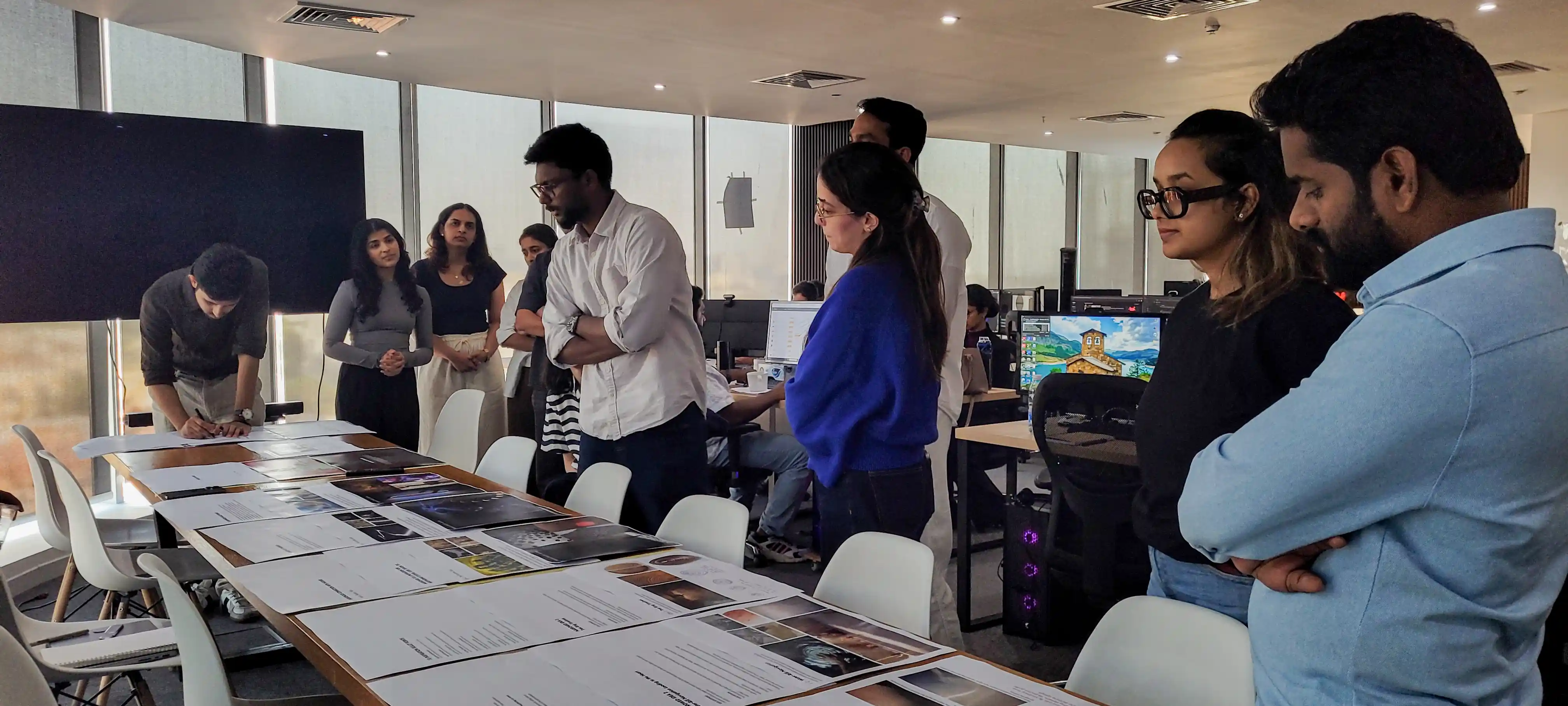
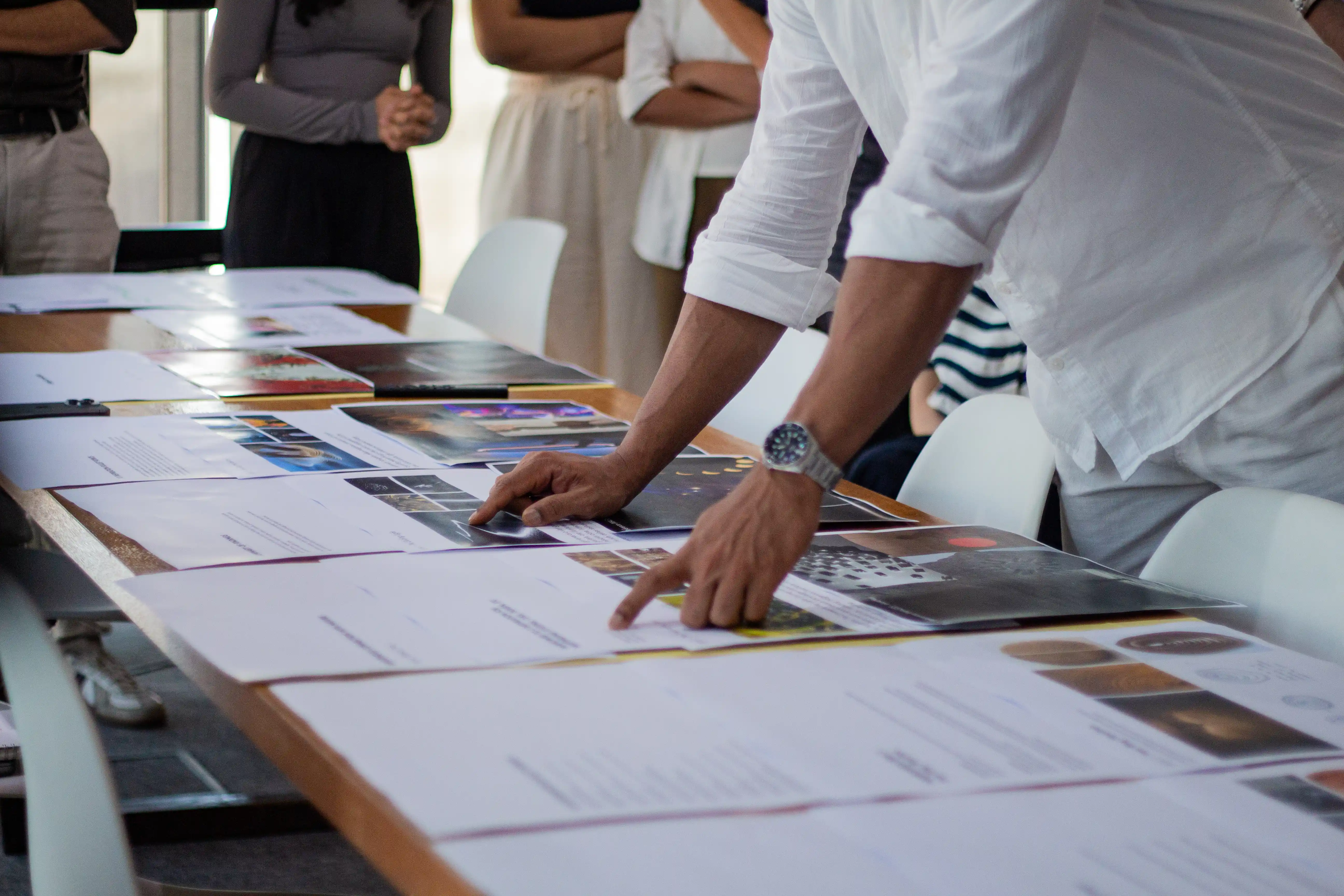
To respond to this ambitious brief, the multidisciplinary design team was divided into three groups, each developing one theme in depth. Through research, collaboration, and creative experimentation, the teams translated these ideas into distinct wayfinding concepts and design directions. What began as a complex design challenge became a valuable opportunity for collective thinking, bringing together diverse perspectives to generate a rich range of ideas that informed the future vision of the wayfinding system.