




Published as “Paving the Way”, the article challenged the idea that wayfinding should be approached simply as the design of physical signs. Instead, Jason argued for a broader view of the human experience, considering how people encounter, understand and move through a place across multiple stages of their journey.
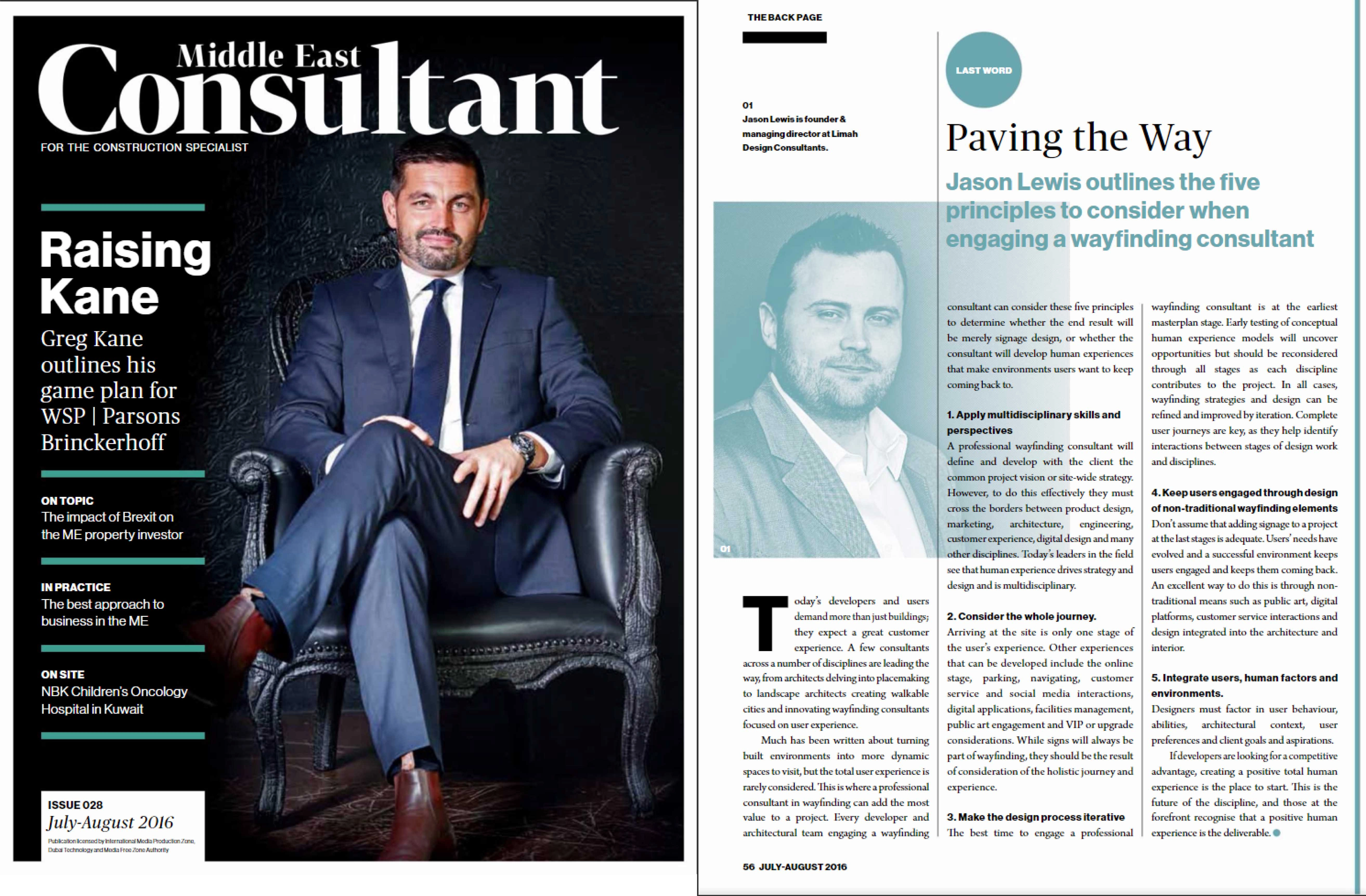
The feature set out five principles.
First was the importance of multidisciplinary thinking. Jason argued that effective wayfinding needs to work across the boundaries between architecture, engineering, digital design, customer experience and other disciplines rather than operating as an isolated design package.
Second was the need to consider the whole journey. The article looked beyond movement within the building to experiences including online discovery, parking, navigation, customer service, social media, digital applications, facilities management and public interaction. The point was not that all of these activities are wayfinding, but that they collectively influence how someone experiences and understands a destination.
Third, Jason advocated an iterative design process, with the wayfinding consultant involved early enough for journey thinking and testing to influence other stages of design rather than being introduced only after major decisions had been fixed.
The fourth principle considered engagement beyond conventional physical information, including digital platforms, customer-service interactions and other elements integrated into the wider environment.
Finally, the article argued for putting users, human factors and context at the centre of the process, considering behaviour, abilities, architectural conditions, preferences and client objectives.
The terminology and technologies surrounding wayfinding have developed considerably since 2016, but the central argument remains closely aligned with LIMAH's approach today: Wayfinding & Navigation is a strategic user-experience discipline concerned with how people understand and move through built environments. Physical signage is one communication layer within that wider system.
Archive note: This page documents an external article originally published in Middle East Consultant, Issue 028, July–August 2016. References to Jason's role and industry terminology reflect the original publication period.