


The distance between those two realities matters.
A building may communicate one intention through its design while people experience something else entirely. An entrance can be architecturally prominent yet still be overlooked. A circulation route can appear logical on plan but become uncertain at eye level. A destination can be correctly located and still feel difficult to find. A public space can be visually strong but offer few cues about how to enter, move through it or understand what belongs where.
My view is simple: a built environment should be judged not only by what was designed, but by what people are actually able to understand and do once they encounter it.
That is the space between architecture and human behaviour. It is also where Built Environment Experience Design becomes necessary.
Architectural intent does not automatically become human understanding
Architecture creates conditions for experience, but people do not read buildings in the same way that design teams do.
Designers understand the organising concept. They know which entrance is primary, which corridor is intended to carry the main flow, how spaces relate across levels and why one route has been prioritised over another. The first-time visitor has none of that project knowledge. They interpret what is visible from where they are standing, using partial information and their own expectations.
That difference can be small on paper and significant in use.
A person approaching a building is unlikely to analyse its formal composition. They are looking for evidence that they are in the right place. They notice the opening that appears accessible, the route other people are taking, the landmark they can recognise, the name they expected to see and the next piece of information that helps them make a decision.
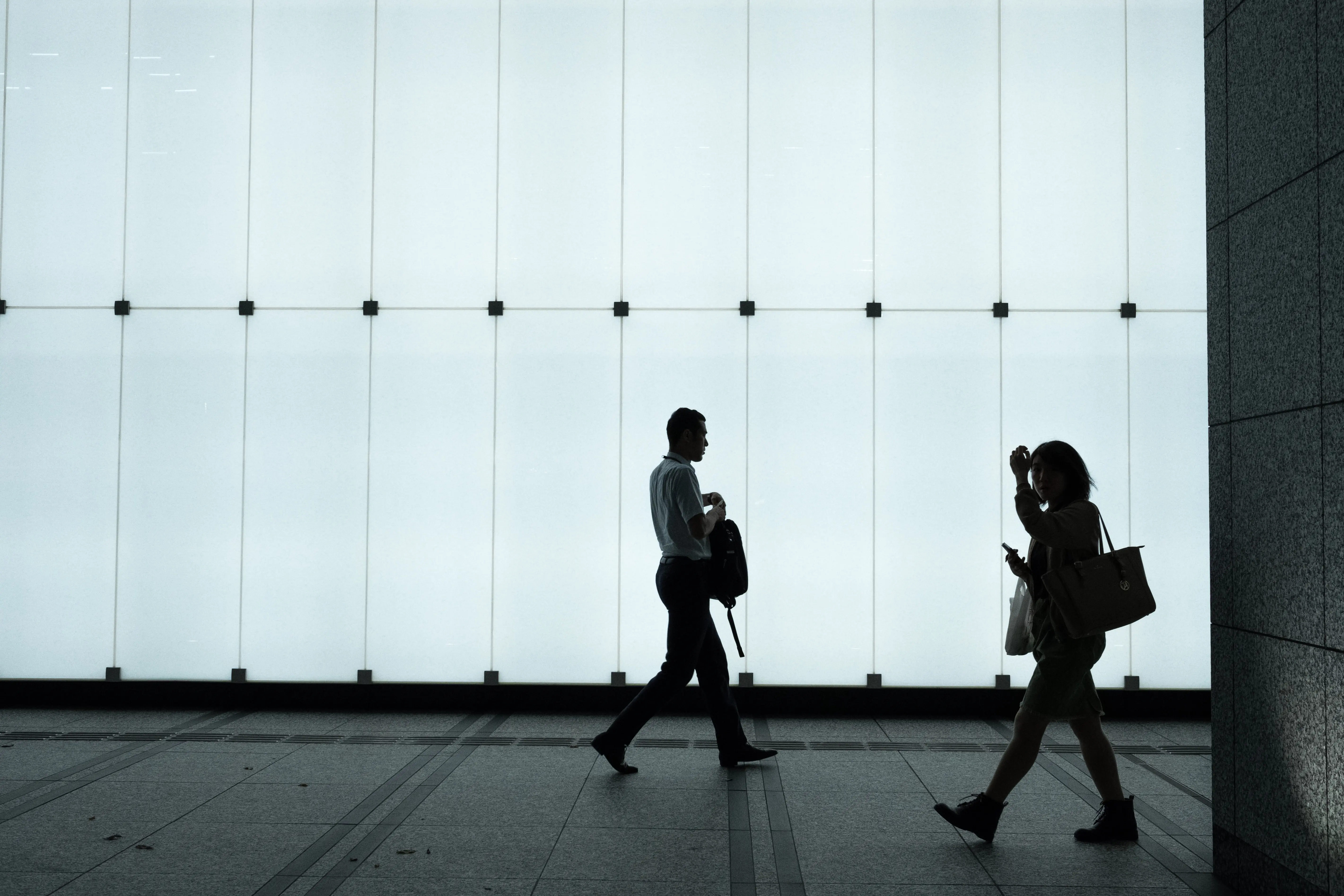
This is why architectural clarity cannot be evaluated only through design intent. It also has to be tested through perception and behaviour.
The question is not simply whether the route exists. It is whether the route can be understood.
The missing layer is translation
Built projects are full of good intentions. Clients want places to feel welcoming, intuitive, inclusive, memorable, efficient or connected. Architects translate those ambitions into space. Operators translate them into services and procedures. Brand teams express identity. Artists create meaning and landmarks. Digital teams build interfaces and information systems.
Each discipline contributes something important. The difficulty is that the user experiences the combined result.
Someone arriving at a mixed-use development does not separate the architecture from the naming system, the parking information, the landscape, the security process, the digital map or the person at reception. All of these elements are interpreted together. When they agree, the place feels coherent. When they contradict one another, the user has to solve the inconsistency.
That translation between professional intention and human experience is often under-designed.
The issue is not that one discipline has failed. More often, the interfaces between disciplines have not been treated as a design problem in their own right.
A main entrance may move during architectural development without the digital arrival information being updated. A destination may be renamed by leasing while physical information still uses the previous name. A security requirement may change the arrival sequence after the public realm has been designed. An artwork may become an excellent landmark without being incorporated into the navigation logic.
Individually, each decision can be reasonable. Collectively, they can make the place harder to understand.
Human behaviour exposes what drawings cannot
Drawings are essential, but they describe a controlled representation of the project. Behaviour introduces uncertainty.
People arrive from unexpected directions. They stop where a designer assumed they would continue. They follow crowds. They avoid routes that feel private. They choose a visible staircase over a hidden lift lobby. They misinterpret thresholds. They remember landmarks rather than destination codes. They ask staff for help when they no longer trust the information around them.
None of this makes people irrational. It makes them human.
A useful experience strategy therefore considers what people are likely to perceive, assume and do at each stage of a journey. It asks where confidence is built, where cognitive effort increases and where a decision depends on information that may not be visible at the right moment.
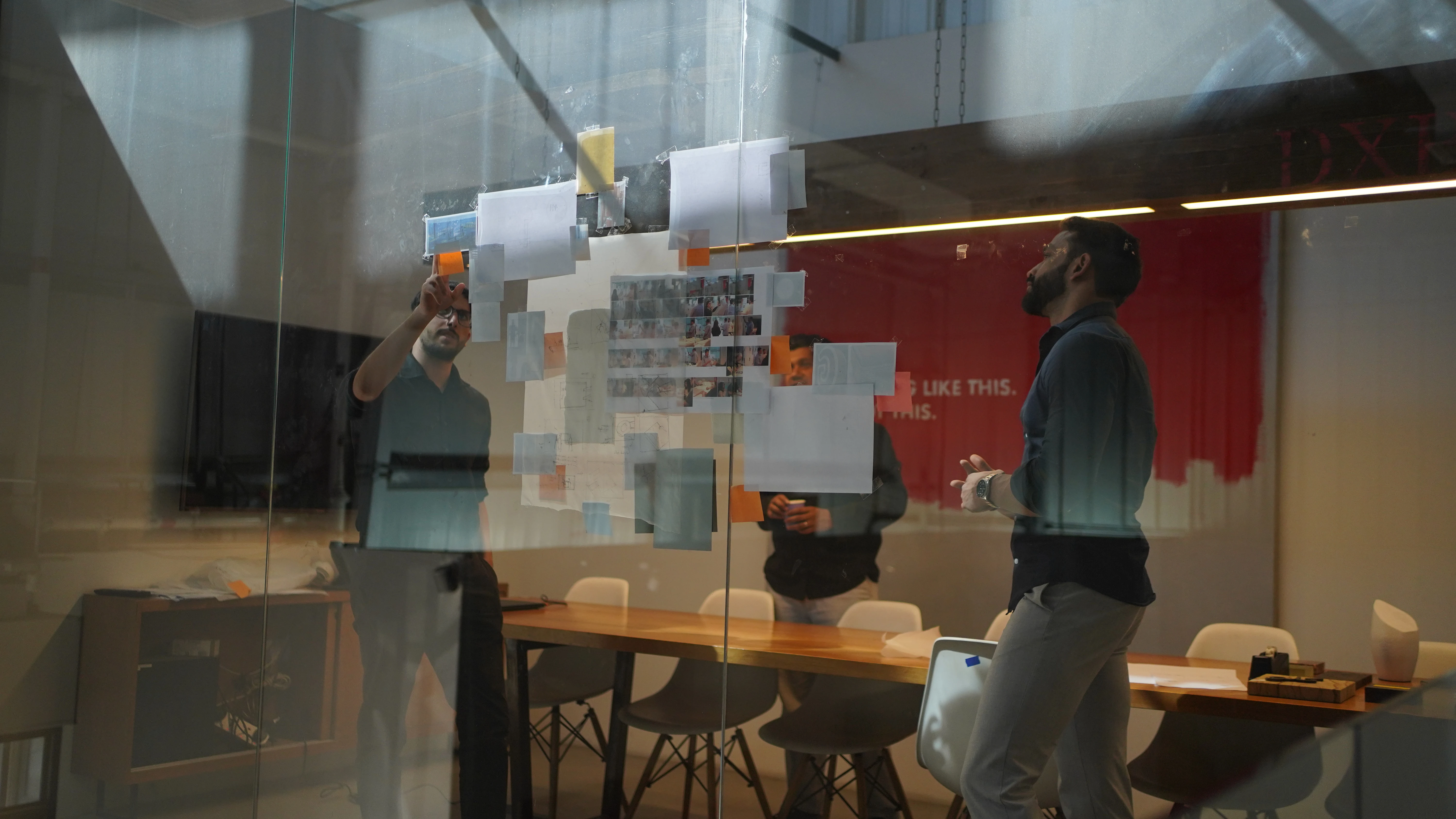
Different contexts change those behaviours. A passenger with a departure deadline reads a transport environment differently from a guest exploring a resort. A patient arriving for an appointment may have less attention available for navigation than a regular member of staff. A resident may value familiarity and discretion, while a visitor needs more explicit reassurance.
The physical environment is the same, but the behavioural condition is not.
Designing the experience requires both to be considered.
The most important experience decisions are often made early
Many experience problems become visible late, even though their causes were introduced much earlier.
By the time a building is approaching completion, the location of entrances, the hierarchy of routes, the position of vertical circulation, the relationship between public and controlled zones and the visibility of major destinations may already be fixed. Physical signage can clarify some of these conditions. It cannot redesign the underlying spatial logic.
This is one reason Built Environment Experience Design has greater influence when it begins early.
At briefing and concept stages, a project can test the human implications of fundamental decisions. Can a first-time visitor identify the intended arrival point? Do major destinations have distinct and understandable addresses? Are transitions between transport, parking, public realm and building entry coherent? Can people see the next important choice before they need to make it? Are accessible journeys integrated rather than treated as secondary routes?
These questions are inexpensive to ask early. They can become difficult to resolve once design, procurement and construction have advanced.
The purpose is not to turn every architectural decision into an experience workshop. It is to identify the decisions with significant behavioural consequences and protect them while there is still meaningful design flexibility.

Every handover between systems is a potential point of friction
Complex environments depend on handovers.
A journey may begin on a website, continue through a mapping platform, move into a road network, enter a car park, pass through security, cross a public space, reach a reception point and continue through the building. Each stage may be owned by a different team or system.
For the user, it is one journey.
A handover becomes fragile when the information changes, the naming changes, the visual hierarchy changes or the expected next step is unclear. These points deserve the same design attention as major physical spaces because confidence can be lost quickly.
Once trust in a place has weakened, people compensate. They slow down. They double-check information. They follow other people. They ask staff. They retreat to a previous decision point. They use their phone even when the answer should be evident in the environment.
These behaviours have practical consequences. They can increase demand on staff, create avoidable movement, contribute to congestion, reduce confidence in services and make the asset feel more difficult to use than it needs to be.
The solution is rarely more information everywhere. It is better coordination at the moments where understanding is most vulnerable.
Experience performance belongs to the whole asset
The relationship between architecture and behaviour is sometimes discussed as a visitor-experience issue. Its implications are wider.
Operators inherit the consequences of confusing layouts and inconsistent information. Facilities teams maintain the physical systems added to compensate for them. Security staff manage routes and exceptions. Tenants depend on customers being able to locate destinations. Accessibility depends on journeys being understandable as well as physically available. Digital platforms rely on destination names and spatial information remaining accurate.
A place that is hard to understand creates work.
That work may appear as additional enquiries, temporary instructions, repeated operational interventions, duplicated information or later design changes. None of these effects needs to be exaggerated to matter. Repeated friction is still friction, and over the life of an asset it can become normalised simply because responsibility for it is distributed.
This is why the human experience should be treated as an asset-wide performance question rather than a decorative layer added near completion.
The strongest projects make experience requirements visible across architecture, operations, information, identity and technology, then maintain that alignment through delivery and change.
Built Environment Experience Design gives the interface an owner
The built environment already has many highly capable disciplines. The case for Built Environment Experience Design is not that those disciplines should be replaced. It is that the relationships between them need deliberate ownership from the perspective of the person using the place.
That ownership begins with questions.
Who is the environment for? What are people trying to achieve? What do they need to understand at each stage? What conditions will affect their attention or confidence? Which routes, names, landmarks, interfaces and operational processes need to agree? Which decisions will become difficult to change later? How will the intended experience survive design development, construction and operation?
The answers create a human logic that can sit across professional boundaries.
At LIMAH, this is the role we define through Built Environment Experience Design. It connects architecture with human behaviour and coordinates the spatial, informational, sensory, operational, identity and digital conditions that shape how a place is actually experienced.

This does not mean claiming ownership of every design discipline. It means taking responsibility for the experience between them.
That distinction matters. The architecture remains architecture. Operations remain operations. Art, technology, identity and Wayfinding & Navigation retain their own expertise. Built Environment Experience Design looks at the connections and asks whether they produce one understandable, usable and meaningful place.
The real project is the place people encounter
A project can be beautifully resolved within each individual discipline and still feel fragmented to the person using it.
The alternative is to treat human behaviour as part of the design problem from the beginning. That means recognising that people interpret environments continuously. They combine space, information, identity, sensory cues, staff interaction, digital content and prior expectations into one understanding of where they are and what they should do next.
The quality of that understanding influences whether the place feels obvious or difficult, welcoming or uncertain, distinctive or anonymous.
Architecture provides the setting. Human behaviour reveals how that setting performs.
Between the two sits a design responsibility that has often been distributed, assumed or left until too late. Giving that space deliberate attention does not reduce the role of architecture. It helps architectural intent survive contact with real people.
That is the purpose of Built Environment Experience Design: to design the experience of place with the same seriousness that we design the place itself.