


The difference is rarely a lack of design. It is a lack of identity. The architecture may be accomplished, the landscape carefully resolved and the public art expensive, yet the complete place can still feel anonymous. People see the individual elements without understanding what connects them or why they belong there.
Place identity and public art should provide that connection. They can translate culture, context, ambition and human experience into stories, landmarks and public moments that make a place recognisable. They can help people understand where they are, remember how the environment felt and describe it to someone else.
This requires more than selecting an artwork or applying a visual theme. Identity becomes valuable when it is embedded in the experience of the place and carried consistently from first arrival to lasting memory.
A place becomes memorable when its meaning is clear
People rarely remember a development through its complete plan. They remember particular moments: an arrival framed by a landmark, a material that could only belong to that location, a story discovered while moving through the public realm or a gathering place that became part of their own life.
These moments give the larger environment a structure in memory. They allow people to connect an experience with a specific place rather than with a generic category such as a mall, resort, campus or mixed-use district.
Meaning does not need to be complicated or explained at length. It needs to be coherent. A place may draw its identity from landscape, heritage, local patterns of movement, a community, an industry, a natural system or the future it is intended to represent. The strongest idea is usually one that can influence many decisions without making every element look the same.
When that idea is absent, identity tends to be assembled from disconnected gestures. One consultant creates a brand story. Another selects materials. An art advisor commissions objects. A graphics team develops patterns. Each contribution may be attractive, but the user receives no clear sense of the whole.
Place Identity & Public Art creates the common logic. It asks what should remain in people’s minds, which parts of the context genuinely matter and how those ideas should appear through space, movement, art and public experience.
Place identity is an experience, not a graphic layer
Identity is often treated as a visual package applied to architecture. It becomes a logo, colour palette, pattern, typeface or collection of environmental graphics. These can support recognition, but they cannot carry the full identity of a place.
People form an impression through everything the environment asks them to see, do and feel. The scale of an entrance, the route towards a central space, the view that is protected, the way a threshold is marked, the sound and atmosphere of a public room and the objects people use as meeting points all contribute to identity.
This makes place identity spatial, behavioural and emotional as well as visual. It should influence where important moments occur, how they relate to movement and what people are likely to remember after leaving.
For me, a useful identity is one that helps the project make decisions. It should clarify why one landmark belongs and another does not, which stories deserve prominence, where cultural references should be subtle and where a stronger public gesture is justified. If the identity cannot guide choices across disciplines, it remains a presentation rather than a working system.
Environmental graphics then have a clear role. They can express narrative, interpret context, distinguish zones and reinforce memory. Their value comes from supporting the larger experience, not from covering surfaces simply because a graphic opportunity exists.

Public art should carry meaning rather than fill space
Public art is frequently introduced after the major spatial decisions have been made. A plaza, lobby or landscape zone is identified as needing an artwork, then a commission is expected to create interest or prestige within a predetermined space.
This can produce a successful object, but it limits what public art can do for the place.
When considered strategically, public art can shape identity, orientation, gathering and emotional connection. It can mark an arrival, create a point of reference, reveal a story, establish a civic moment or change how people occupy a public space. Its value lies in the relationship between the artwork, the site and the people who experience it.
That relationship should determine whether the right response is sculpture, light, media, sound, landscape, graphics, interaction, performance or something less easily categorised. Beginning with an empty location and a preferred object type reverses the process. The project should first understand what the moment needs to achieve.
Public art also carries risk when the ambition is vague. A work may be visually striking but culturally disconnected. It may compete with architecture, obstruct movement, create maintenance demands or become isolated from the daily life of the place. These are not simply artistic issues. They affect operations, public acceptance and the long-term credibility of the development.
Public Art Strategy will go deeper into how that purpose is defined. At the Primary Service level, the principle is clear: art should emerge from the meaning and experience of the place rather than be used as decoration applied at the end.
Cultural research gives identity something real to belong to
Meaningful identity requires evidence. Before a project decides what story to tell, it needs to understand the place it is entering.
Cultural research may examine history, landscape, climate, trade, craft, language, material culture, community memory, migration, rituals and contemporary life. It should also study how the location is changing and what the project may contribute to its future. The objective is not to collect references for a mood board. It is to identify the ideas, relationships and tensions that can give the new place relevance.
This work is particularly important where a development is expected to represent a city, district or institution. A superficial reference may appear respectful to an international design team while feeling generic or inaccurate to people who know the context. Repeating familiar symbols can reduce a complex culture to a visual shorthand.
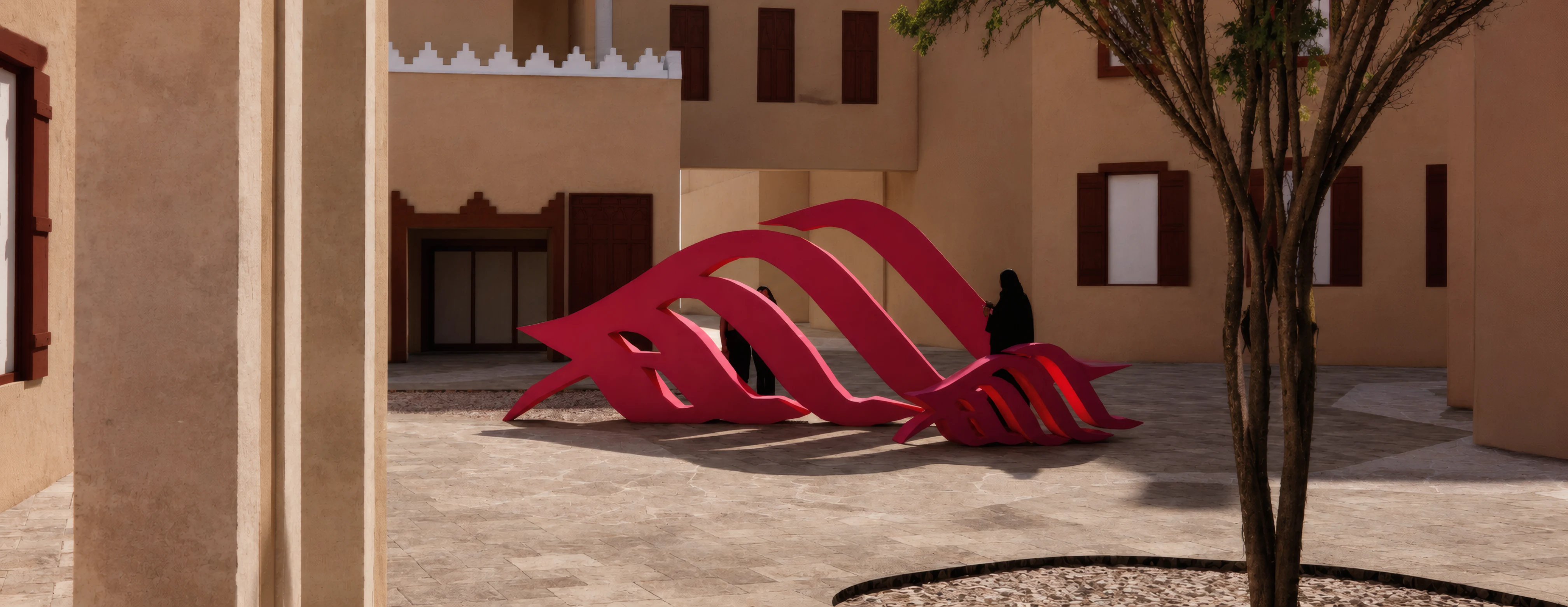
Research creates a stronger basis for judgement. It can distinguish between stories that are central and those that are incidental. It can reveal whose perspective is missing, where consultation is needed and which references require greater sensitivity. It can also uncover contemporary narratives that prevent identity from becoming a fixed interpretation of the past.
Community mapping can extend this understanding by identifying local voices, cultural assets, patterns of use and shared memories. The process does not mean that every view becomes a design instruction. It gives the project a more informed understanding of the people and meanings already connected to the place.
The result should be depth without burden. Users do not need to know all the research. They should feel that the identity belongs.
Narrative turns research into a coherent experience
Research produces material. Narrative gives it direction.
A place narrative identifies the central idea the environment should communicate and the supporting themes that can appear across different moments. It explains how the project relates to its context, what it represents and why people should care. It also creates boundaries by making clear which ideas do not belong.
This is different from writing a marketing story after the design is complete. A useful narrative influences the design itself. It can shape the arrival sequence, landmark hierarchy, public art briefs, environmental graphics, material references, naming, interpretation and the rhythm of discovery through the site.
The narrative should be capable of variation. A city district cannot repeat the same message at every corner. One theme may appear through a major artwork, another through landscape, another through a subtle material detail and another through a digital or interpretive layer. These expressions should feel related without becoming literal illustrations of the same story.
Site-specific narratives are especially important for large developments containing different architects, plots or phases. Without a shared identity framework, each area can become a separate design statement. The narrative provides continuity while allowing individual places to retain their own character.
This also protects the project from trend-driven decisions. Styles change quickly. A grounded narrative can support new artistic and design responses over time without losing the original logic of the place.
Landmarks connect memory with orientation
A landmark is valuable because people can recognise it, relate other places to it and use it in conversation. It may be a work of art, building feature, landscape element, view, light installation or distinctive public space. Its power comes from being memorable within the structure of the journey.
This creates a direct relationship between Place Identity & Public Art and Wayfinding & Navigation. People often orientate through memorable features before they read formal information. They arrange the environment in their minds around the central square, the red sculpture, the illuminated tower, the water feature or the view towards a natural landmark.
For a landmark to work, it needs distinction, visibility and a meaningful position. An object can be large without becoming useful if it is hidden from important approaches or surrounded by equally dominant features. Placement should consider sightlines, movement, thresholds, arrival, gathering, scale and the way the landmark will be experienced at different speeds and times of day.
Landmarks also need hierarchy. If every zone contains a major gesture, none of them establishes a clear reference. The strategy should decide which moments organise the larger place, which support local recognition and which should remain quiet.
This does not make public art subservient to navigation. It recognises that identity, memory and orientation can strengthen one another. A landmark becomes more valuable when it is both emotionally meaningful and practically useful within the place.
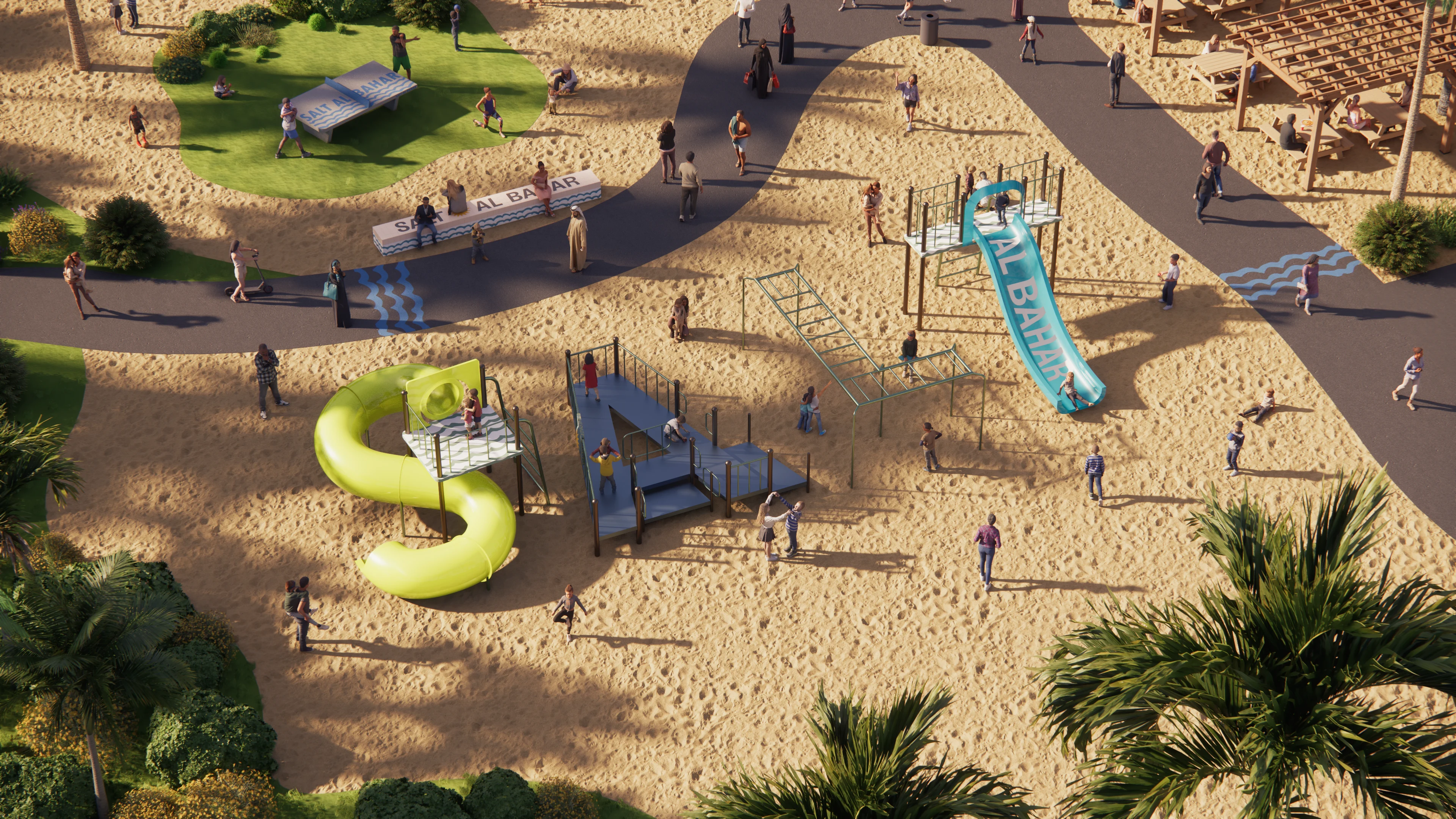
Identity should unfold across the complete journey
A single signature artwork cannot carry the identity of an entire development. It can become an important anchor, but people encounter the place through a sequence of approaches, entrances, routes, transitions, destinations and public spaces.
The identity should therefore be distributed through the journey. The approach may establish expectation. Arrival may introduce the central narrative. Landmarks may organise movement. Public spaces may create opportunities to gather or interact. Materials, graphics and smaller artworks may reveal further layers. Departure may leave a final image that strengthens recall.
This sequence allows identity to build rather than announce everything at once. It also helps different scales of intervention work together. A city-scale landmark can establish recognition from a distance, while a small interpretive detail creates intimacy at walking pace.
Continuity matters across physical and digital experiences. Pre-arrival content, maps, event communication and social media may shape expectations before someone reaches the site. If the digital identity promotes one story while the place communicates another, the experience feels constructed rather than coherent.
The same applies to operations. Temporary events, tenant activity, seasonal installations and maintenance can either reinforce or gradually weaken the identity. A place is experienced over time, so its identity needs a framework that can guide change rather than a fixed collection of launch-day features.
Emotional distinction comes from relevance, not spectacle
Memorability is often confused with visual impact. Projects compete for attention through scale, novelty, technology or the promise of an iconic object. These qualities can create an immediate image, but an image alone does not guarantee attachment.
Emotional distinction develops when the experience feels relevant to the place and meaningful to the person encountering it. This may come through recognition, curiosity, pride, surprise, reflection, play or the feeling that a public space belongs to the people who use it.
The strongest response is not always the loudest. A restrained work can carry more meaning than a monumental one if it reveals something specific about the site. A familiar material used unexpectedly can create a stronger connection than an imported visual language. A space that allows people to gather and build their own memories can become more valuable than an object designed mainly to be photographed.
This is also where cultural authenticity and public experience meet. The purpose is not to make every place feel historic or locally themed. It is to avoid identity that could be transferred unchanged to another development. A meaningful place should have reasons for being the way it is.
Commercial value follows from that distinction. Places that are easier to recognise, describe and recall are better positioned to build destination identity. Public spaces that people choose to use can support activity and repeat visits. Landmarks can make a large development easier to understand. These outcomes should be evaluated through observable behaviour and project objectives rather than unsupported promises of financial return.
A complete identity and public art system needs shared decisions
The form of the work will vary by project, but a complete Place Identity & Public Art system should resolve the relationships between:
- The project ambition, users and experience the place should create.
- The cultural, historical, environmental and community context that should inform identity.
- The central place narrative and supporting themes.
- The hierarchy of landmarks, public moments and identity cues across the journey.
- The roles of public art, architecture, landscape, lighting, graphics, interpretation and digital media.
- The locations, scales and types of intervention appropriate to different spaces.
- The requirements for accessibility, interaction, safety, durability, maintenance and operations.
- The commissioning, coordination and governance needed to protect meaning through delivery and future change.
These decisions should be connected before separate teams begin developing individual outputs. A public art commission depends on the narrative and location. A landmark depends on movement and visibility. An interpretive graphic depends on research and information hierarchy. A media installation depends on technology, content ownership and long-term operation.
Fragmented appointments can still produce good components, but they make the complete identity harder to protect. The client should be able to see how each intervention contributes to the larger experience and who is responsible for maintaining that relationship.
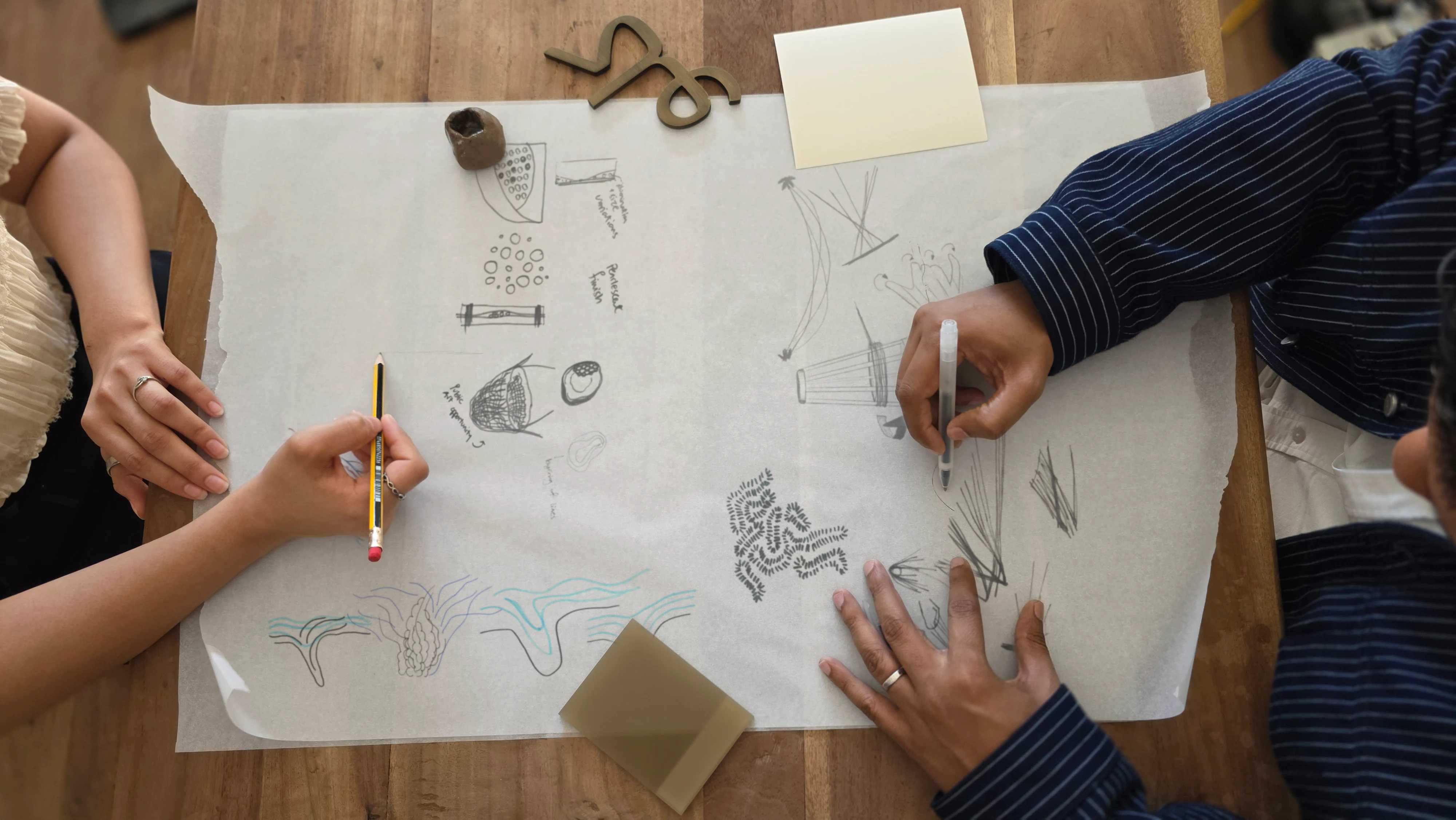
Identity loses value when it enters the project too late
Place Identity & Public Art has the greatest influence when it can shape the opportunities rather than respond only to spaces left over.
During early planning, the work can identify important stories, views, arrival moments, gathering spaces and potential landmarks. It can help architecture, landscape and public realm teams understand where identity should be expressed and which moments need to remain available for artists or later interventions.
As design develops, the identity framework can guide briefs, commissions, interpretation, materials, environmental graphics and the coordination of physical and digital experiences. During delivery, it can protect placement, sightlines, technical requirements and narrative intent. After opening, governance can manage new artworks, changing tenants, events, content updates and maintenance without allowing the identity to fragment.
When this thinking begins late, public art is more likely to inherit unsuitable locations, unresolved infrastructure or unrealistic programme constraints. Cultural research may become a justification for decisions already made. Graphics may be asked to create character that the spatial experience does not support. The project spends money on identity while limiting its ability to influence the place.
Early involvement does not require every artwork to be designed at concept stage. It requires the project to understand the role of identity and protect the conditions needed for strong work to emerge.
Give people a reason to remember the place
A memorable place is not created by adding more visual content. It is created by deciding what matters and carrying that meaning through the environment with discipline.
Place Identity & Public Art can connect research with narrative, narrative with landmarks and landmarks with the way people move, gather and remember. It can turn public art from an isolated object into part of the experience system. It can make identity visible without reducing it to graphics and emotionally distinctive without depending on spectacle.
The final test is simple. Can people recognise the place, understand something of what it represents and carry a clear memory away with them?
When the answer is yes, the built environment becomes more than a collection of designed components. It becomes a place people can describe, value and remember.