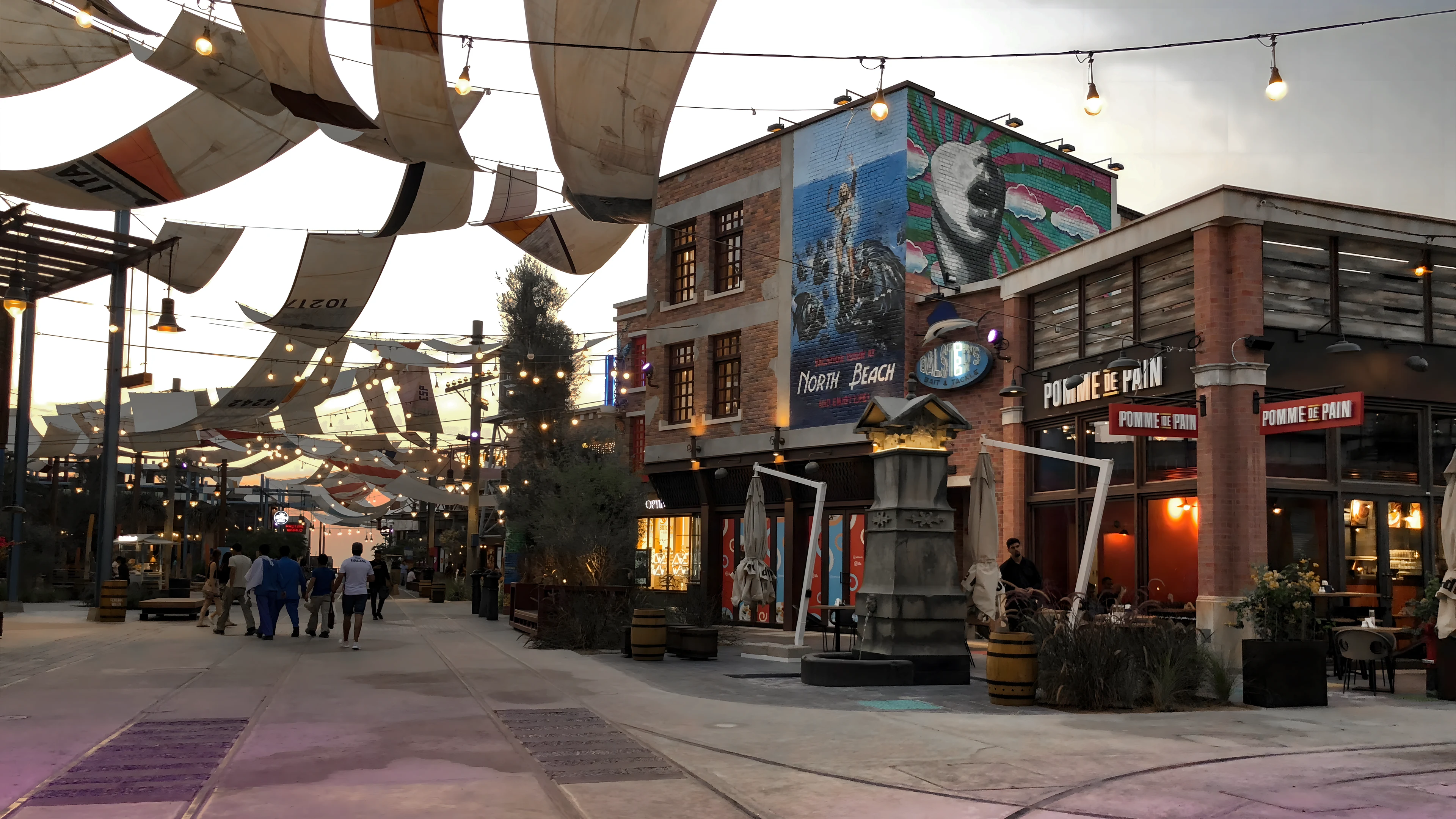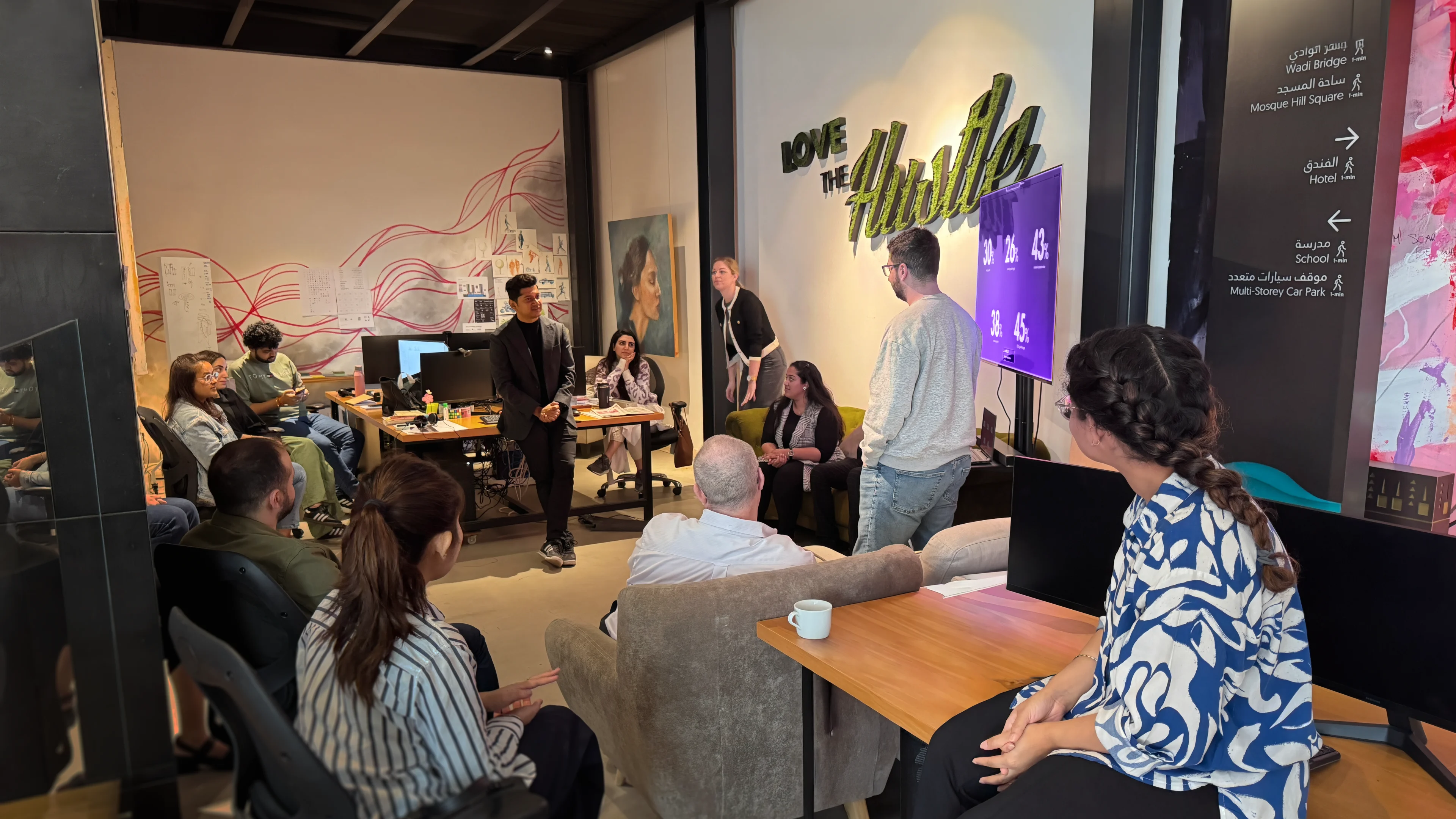



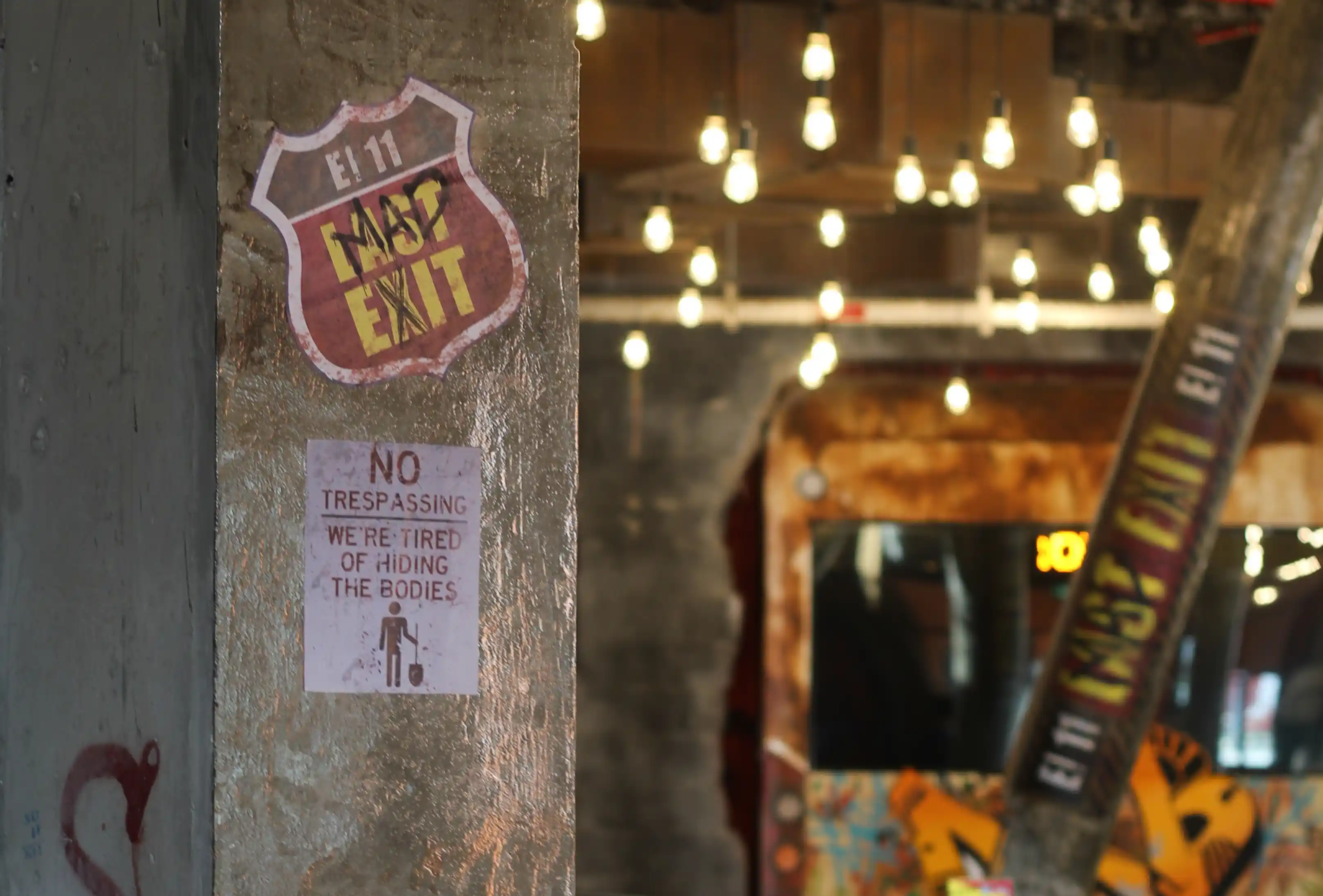
Meaning requires connection. Place narrative creates that connection by identifying the stories, characteristics and cultural ideas that matter, then translating them into experiences people can encounter through the built environment. This is more demanding than choosing a theme and applying it to surfaces. A useful place narrative influences how a destination is understood, organised, named, expressed and remembered. It can shape landmarks and public art, environmental graphics and interpretation, movement through the site and the relationship between individual spaces.
The story becomes valuable when it stops being something written about the place and starts becoming something people can experience within it.

A place narrative is not a marketing story
The word narrative is used loosely in development and design. It can mean a brand story, a historical account, an architectural concept, a cultural theme or simply the language used to describe a project. These may all contribute to place narrative, but none is sufficient on its own.
Place narrative design concerns the relationship between meaning and experience. It asks what makes this particular place culturally, socially, historically, environmentally or functionally distinctive. It identifies which of those characteristics matter to the people who will use it. It then establishes how those ideas can become visible, understandable and memorable through the environment.
That makes narrative different from a marketing proposition. Marketing can describe what a destination wants people to believe about it. Place narrative has to survive physical experience.
If a district is presented as connected to its landscape, that relationship should be perceptible in the place itself. If a development claims a meaningful connection with local culture, that connection needs greater depth than decorative motifs. If a destination is organised around a particular social or civic purpose, people should be able to recognise that purpose through the way spaces, landmarks, activities and information work together.
Narrative becomes credible when the environment provides evidence for it.
Start with what is genuinely particular to the place
Distinctive place narratives rarely begin with an invented theme. They begin by looking closely at context. That context may include landscape, climate, ecology, settlement patterns, architecture, industry, craft, language, migration, trade, social customs, memory or the contemporary ambitions of a community. Not every piece of research needs to appear in the finished environment. The purpose of cultural and contextual research is to identify what is relevant enough to guide the experience. This requires judgement.
Some stories are historically significant but difficult to translate into a useful spatial idea. Others may be meaningful to one group but not appropriate to represent as a universal identity. Certain cultural material may require specialist interpretation, community participation or approval before it can be used publicly. A strong narrative strategy therefore selects rather than collects.
It looks for ideas with enough depth to work at different scales and enough authenticity to belong to the place. The result should give designers a meaningful foundation without reducing culture to a visual reference library.
Cultural context needs interpretation, not extraction
Using culture within the built environment carries responsibility. A place is not made culturally meaningful simply by reproducing recognisable symbols. In some cases, that approach can reduce complex histories and living cultures to surface decoration. Narrative strategy needs to understand why an idea matters before deciding how it should appear.
A traditional pattern, material, story, craft or form may have a specific origin and meaning. Its relevance can depend on geography, community, period or use. Removing it from that context can change what it communicates. The design process should therefore distinguish between inspiration and representation.
Research can inform proportions, rhythms, material choices, spatial sequences, artwork commissions, naming principles or environmental character without necessarily copying a cultural reference literally. In other situations, direct interpretation may be appropriate, particularly where heritage, education or cultural communication is part of the purpose of the place. The required research, consultation and approvals will depend on the subject and context.
The principle remains consistent: cultural meaning should be understood before it is designed.
Narrative strategy gives different disciplines a shared source
Large projects are created by many design teams. Architecture, landscape, interiors, lighting, art, identity, digital experience, information and operations may all contribute to how the destination is perceived. Without a shared narrative, each discipline can develop its own interpretation of the place. Individually, those responses may be strong. Together, they can become a collection of unrelated ideas.
Narrative strategy creates a common source. It can define the central ideas the place should express, supporting themes, cultural principles, tone, terminology and the relationships between different parts of the destination. The objective is not to make every discipline look the same.
A landscape response should not simply repeat an environmental graphic. Public art should not become a three-dimensional version of a brand mark. Architecture should not be forced into literal storytelling. The value comes from coherence without repetition. Different disciplines can interpret the same narrative according to what each does best. Architecture can work through space and form. Landscape can respond through ecology, material and movement. Public art can create encounters and landmarks. Naming can organise meaning through language. Environmental graphics can communicate specific information or interpretation.
The expressions change. The underlying logic remains connected.
Naming can make the narrative part of everyday navigation
Names are among the most persistent expressions of place identity. People use them to understand districts, buildings, streets, destinations and landmarks. They appear in conversation, maps, booking systems, digital interfaces, operational procedures and physical information. This makes naming both an identity decision and a practical experience decision.
A strong naming strategy can reveal relationships within a place. Names may draw from geography, history, landscape, function or an agreed narrative structure. Used consistently, they can help people form a mental model of a destination. Weak naming can do the opposite.
If names are created independently for marketing, leasing, operations and navigation, one destination can accumulate several identities. Internal project terminology may survive into public use even when it means little to visitors. Similar names can make destinations difficult to distinguish. Place narrative can give naming a coherent foundation, but narrative value cannot override usability. Names still need to work for the people who must understand, pronounce, remember, search for and navigate with them.
The strongest systems achieve both: meaning and practical clarity.
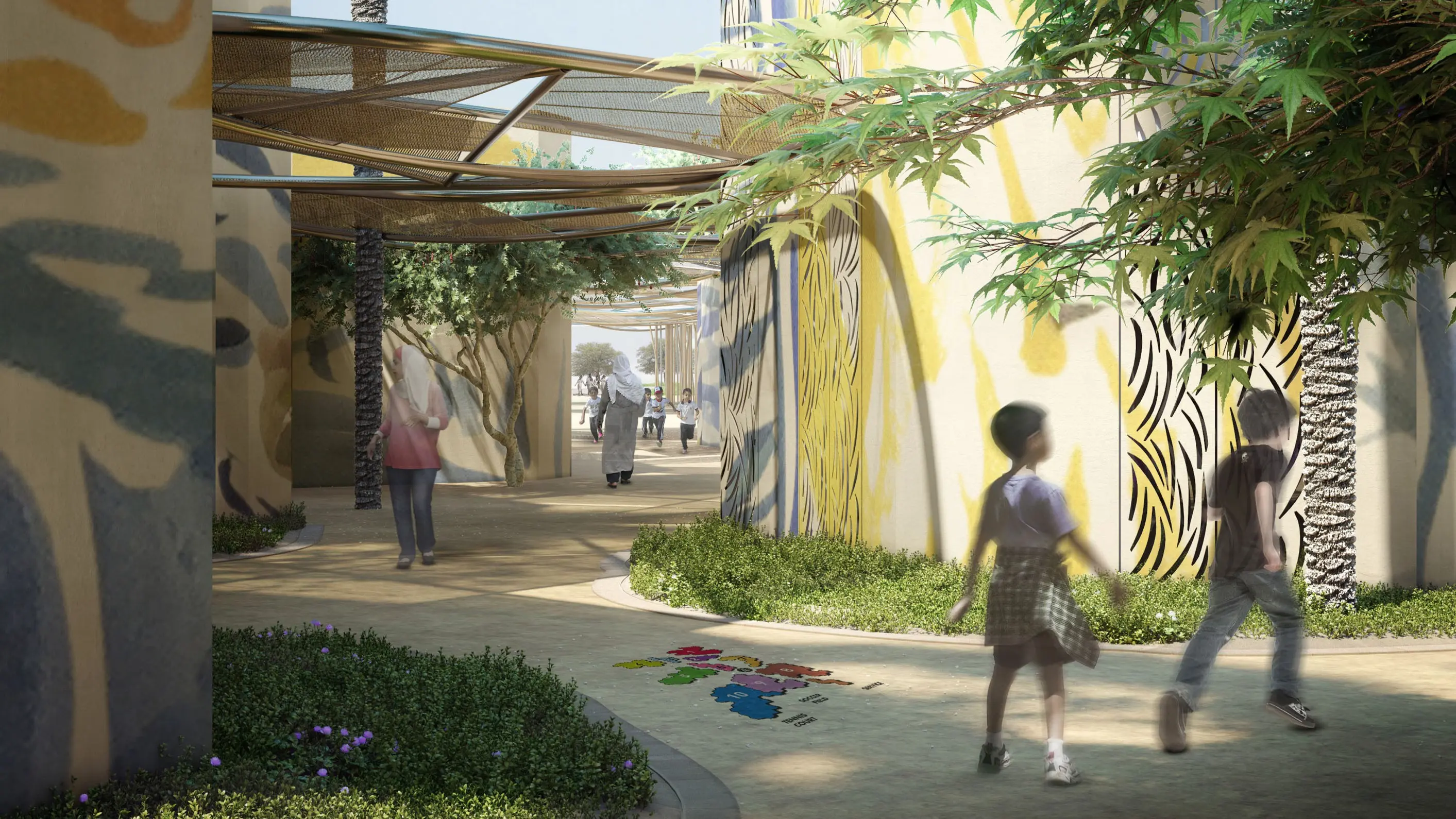
Landmarks turn narrative into spatial memory
People remember places through distinctive moments. A particular artwork. A courtyard. A tower. A tree. A threshold. A view. A material change. A sound. A gathering space. These features can become landmarks whether the design team intends them to or not.
Narrative strategy creates an opportunity to make some of those moments deliberate. A landmark can express something specific about the place while also helping people recognise location and build a mental picture of the environment. This is where Place Identity & Public Art can intersect directly with Wayfinding & Navigation without the two becoming the same discipline.
A memorable artwork, for example, may carry cultural meaning and establish a strong destination identity. Its distinctiveness can also help someone remember where they turned or where they agreed to meet. The functional and emotional roles reinforce each other. This is more powerful than treating identity as a graphic layer added after the spatial experience has already been determined. When narrative is considered early, meaning can become part of the architecture, landscape and sequence of the place itself.
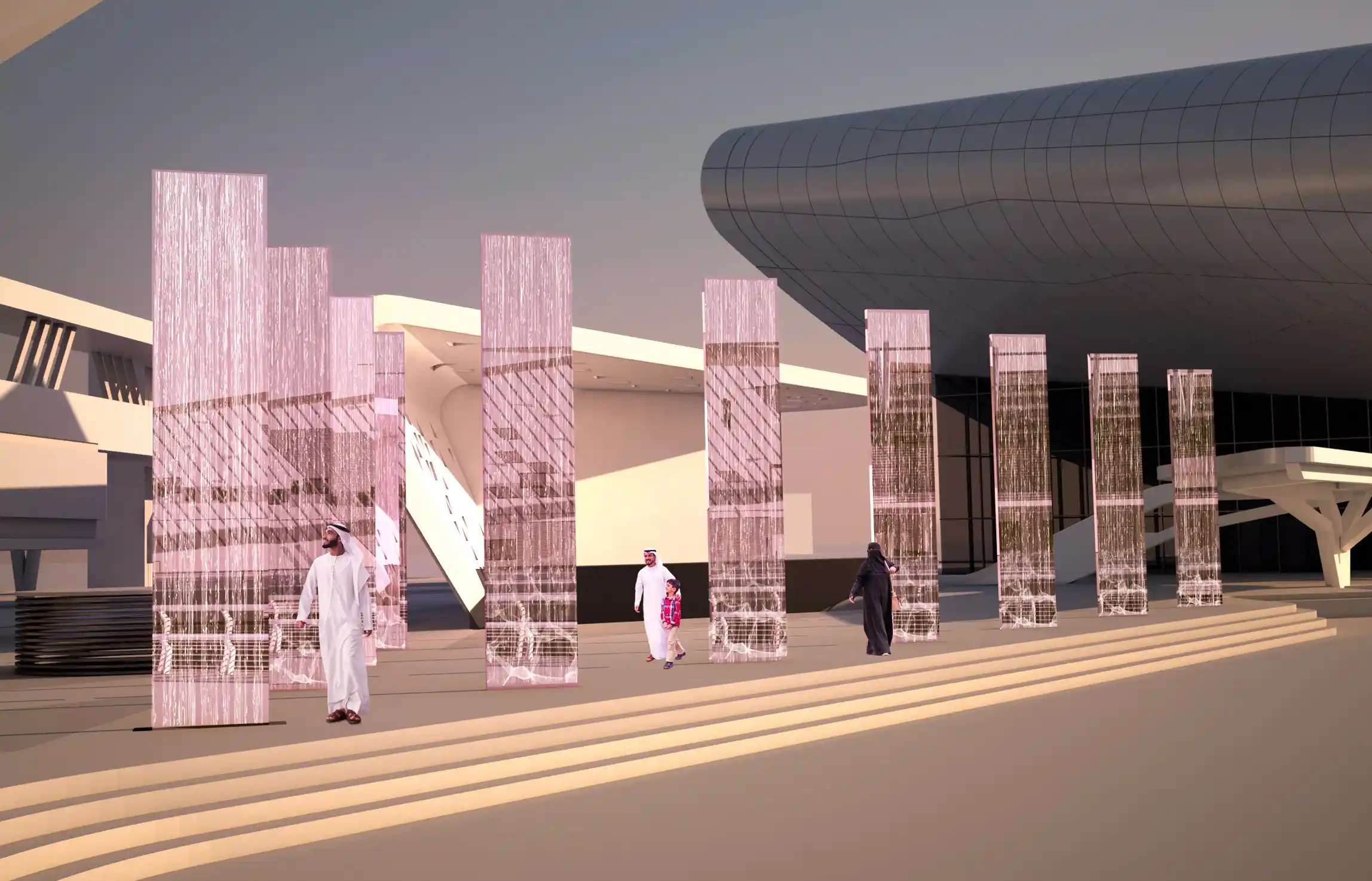
Environmental graphics should reveal meaning, not manufacture it
Environmental graphics can make narrative visible through typography, illustration, pattern, interpretation, maps and other physical communication. They are valuable tools, but they are most effective when they reveal a story that already has a relationship with the place. The weaker approach is to expect graphics to manufacture identity after the wider environment has been designed without one.
This often leads to a familiar condition: surfaces contain extensive visual storytelling, yet the experience of moving through the place has little connection to what the graphics are saying. A stronger approach asks where explicit communication adds value. Some stories benefit from interpretation. A heritage site may need to explain events that are no longer physically visible. A cultural destination may provide layers of information for visitors who want to explore further. A public artwork may need context to make an unfamiliar reference accessible.
Other ideas are better experienced without explanation. Material, landscape, spatial sequence, art and sensory conditions can communicate character in ways that do not require people to stop and read. Narrative design needs both forms of communication. The skill lies in knowing when the environment can carry the meaning and when information should make it explicit.
Public art can carry stories without becoming illustration
Public art is one of the most visible ways a place can express narrative. It can respond to history, community, environment, movement, memory or contemporary life. It can create a landmark, provoke curiosity, change how a space is used or give people a reason to remember a particular location. But public art becomes weaker when its role is reduced to illustrating a predetermined theme.
Artists need enough freedom to interpret rather than simply decorate a narrative. A useful narrative framework can establish the cultural and contextual territory of a commission without dictating the final artistic answer. It can identify what matters about the place, where opportunities exist and which relationships between artwork, audience and environment deserve exploration.
The artist then brings another perspective to that material. This can create a richer result than asking an artwork to communicate a literal story already resolved elsewhere. For clients and design teams, the distinction matters. Narrative should provide depth for public art, not constrain it into becoming explanatory furniture.
/image
Memory is an important measure of place identity
People do not remember built environments as complete drawings. They remember fragments. The arrival. A particular view. The atmosphere of a space. An encounter. A landmark. A name. The route between two important places. Something surprising, useful or emotionally significant. Over time, these fragments become the mental representation of the place.
Narrative can help connect them. Repeated ideas, relationships and cues allow people to recognise that different experiences belong to the same destination. Distinct landmarks create anchors. Naming gives those anchors language. Public art creates moments of attention. Spatial sequences reveal differences between areas while maintaining an underlying identity. The objective is not to make every moment memorable. If everything demands attention, little stands out.
The more useful goal is to establish a hierarchy of experiences, allowing ordinary moments to support the distinctive ones. This is particularly important in large developments where identity can otherwise dissolve across scale. A district needs enough consistency to feel connected and enough variation for people to recognise where they are.
Place narrative can provide the structure for both.
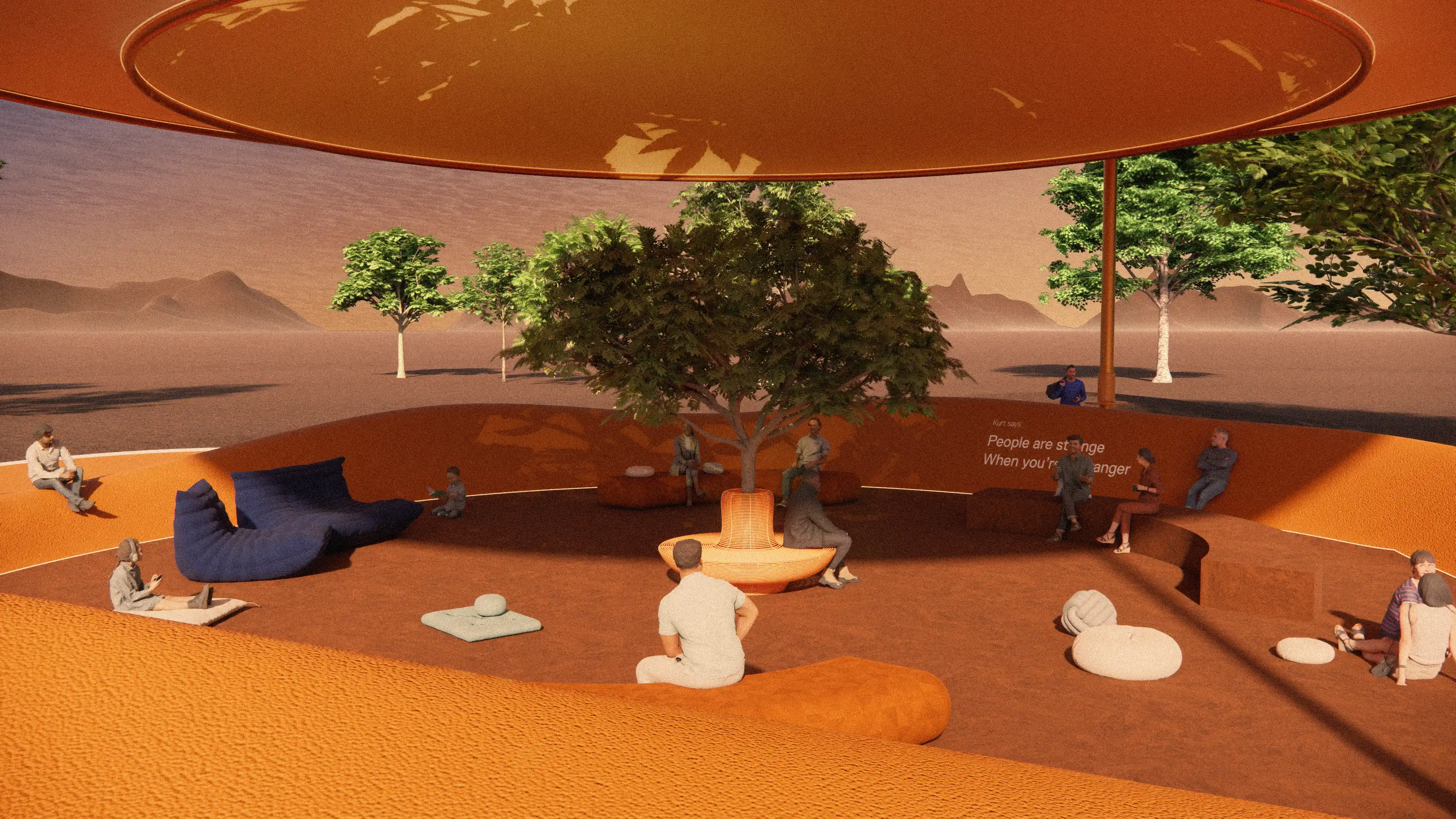
Meaning has practical consequences
Place narrative may sound primarily cultural or emotional, but its effects can be practical. A coherent identity can make different parts of a development easier to distinguish. Meaningful names and landmarks can support orientation. Shared narrative principles can reduce arbitrary design decisions across multiple packages. Cultural context can give public art commissions greater relevance. A recognisable sequence of experiences can help people form stronger mental models of complex destinations.
Narrative can also influence how a place evolves. Developments change after opening. New tenants arrive. Events are introduced. Public art programmes expand. Digital content changes. New phases are built. A clear narrative framework gives future decisions something to respond to without requiring every addition to repeat the original design. That is an important distinction.
Strong place identity should be capable of growth. If identity depends entirely on a fixed collection of graphic motifs or decorative treatments, change can quickly weaken it. If it is based on deeper principles about the place, new expressions can emerge while remaining recognisably connected.
A meaningful place does not need to explain its story everywhere
The strongest place narratives are not necessarily the most visible. They are the ones that make different decisions feel connected. Research informs the strategy. Strategy establishes the ideas that matter. Those ideas influence naming, spatial character, landmarks, public art, environmental graphics and other experiences. People encounter different parts of the narrative according to where they are, what they are doing and how deeply they choose to engage.
Some visitors may never consciously identify the story. They may simply experience a place that feels specific rather than generic, coherent rather than assembled and memorable rather than interchangeable. That is not a failure of storytelling. It may be its most successful expression. Place narrative design should not turn the built environment into a book that everyone is required to read.
Its role is to give design a meaningful source, allowing culture, identity and story to become part of the experience of the place itself.