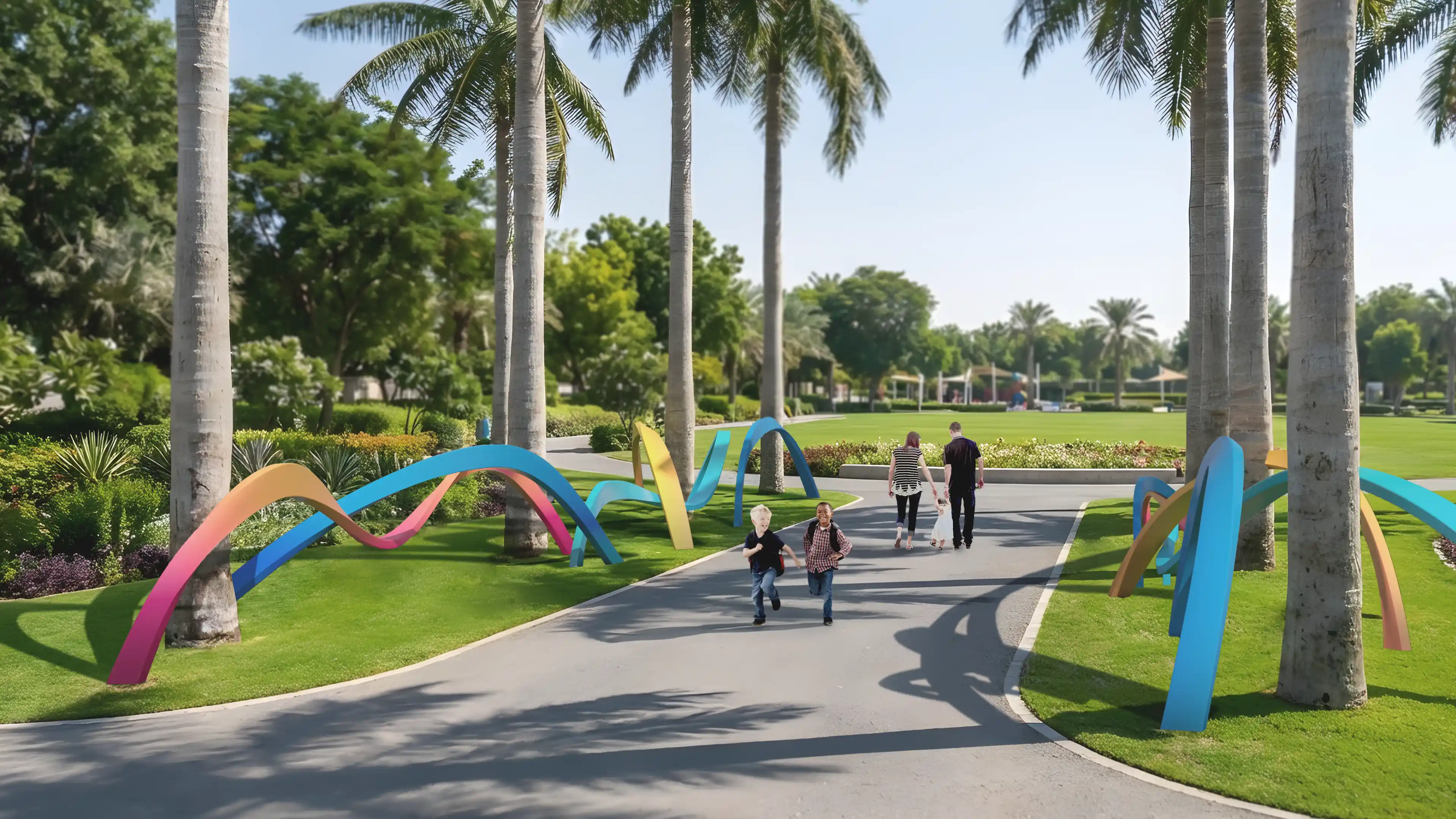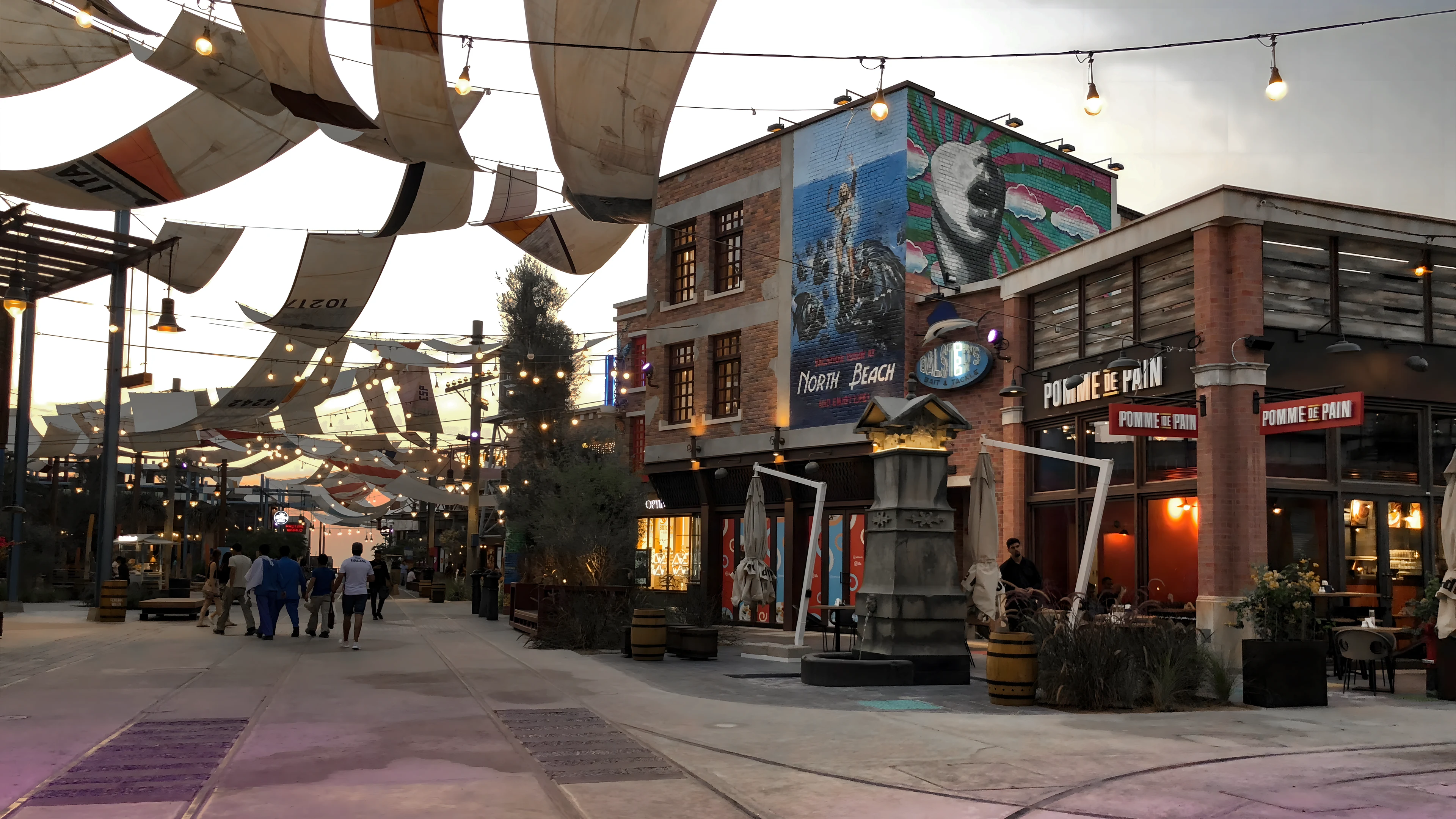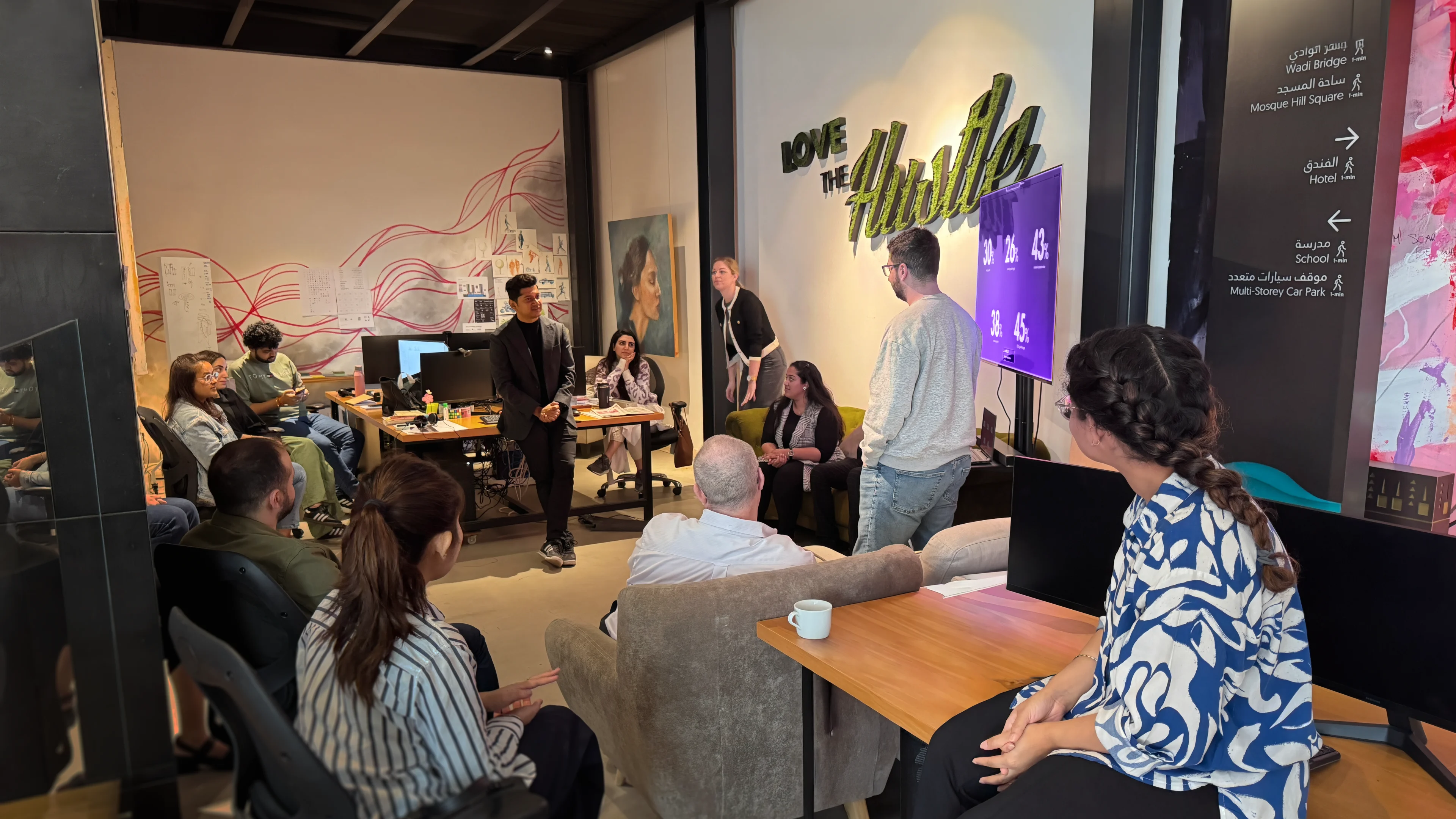




A space is designed. A location is identified. A budget is allocated. Someone decides that an artwork would improve the plaza, lobby, arrival sequence or public realm. The conversation then moves quickly towards artists, forms, materials and visual impact.
That sequence treats art as an object to be added to a place.
A public art strategy starts somewhere else. It asks why art belongs in the project, what role it should play in the experience, which parts of the place it should influence and what people should understand, feel or remember because it is there.
The difference matters. Art can be visually impressive and still have little relationship with its setting. It can be expensive without being meaningful, prominent without being memorable and culturally referenced without feeling culturally relevant.
A stronger approach makes public art part of the identity and experience of the built environment rather than a decorative response to an empty space.
Public art strategy starts with purpose
The first strategic question should not be what the artwork looks like. It should be what the artwork needs to do.
Different places demand different roles from public art. A major arrival point may need a recognisable landmark. A civic space may need to express shared history or contemporary culture. A mixed-use development may need moments that distinguish districts and help create memory. A resort may use art to deepen the relationship between landscape, architecture and local context. A transport environment may benefit from interventions that give character and recognition to otherwise repetitive spaces.

There is no single correct purpose.
What matters is defining that purpose early enough for it to influence decisions.
A public art strategy can establish the intended role of art across the development, the relationship between individual opportunities and the larger place identity, the types of moments that warrant artistic intervention and the principles that should guide future commissioning.
This turns a broad ambition such as “include public art” into a usable design position.
Without that position, every artwork risks becoming an individual decision. Different teams may commission pieces for different reasons. Locations may be selected because space happens to be available. Themes may emerge independently. The result can contain good artworks while still lacking coherence as a place.
Strategy creates the connective logic.
The artwork is only one part of the experience
Public art is usually discussed in terms of individual pieces. People experience it within a much larger sequence.
They approach through a street, landscape or building. They encounter thresholds, views and destinations. They move through spaces at different speeds. Some places encourage gathering; others are transitional. Certain locations are visible from a distance, while others reveal themselves only through movement.
An artwork therefore has relationships beyond its physical footprint.
Its scale may affect whether it reads as a distant landmark or an intimate encounter. Its position may reinforce an arrival, define a meeting point or give identity to a particular district. Its visibility may create anticipation along a route. Its material or form may respond to architecture, landscape or climate. Its meaning may become clearer through the sequence in which people encounter it.
This is why selecting an available space and inserting an artwork is not the same as developing a public art strategy.
The strategic task is to understand where art can contribute most strongly to the experience of the place, then define the role of those opportunities before individual creative responses are developed.
That distinction also protects artistic freedom. A good strategy does not need to prescribe the final artwork. It provides a meaningful brief within which artists can respond.
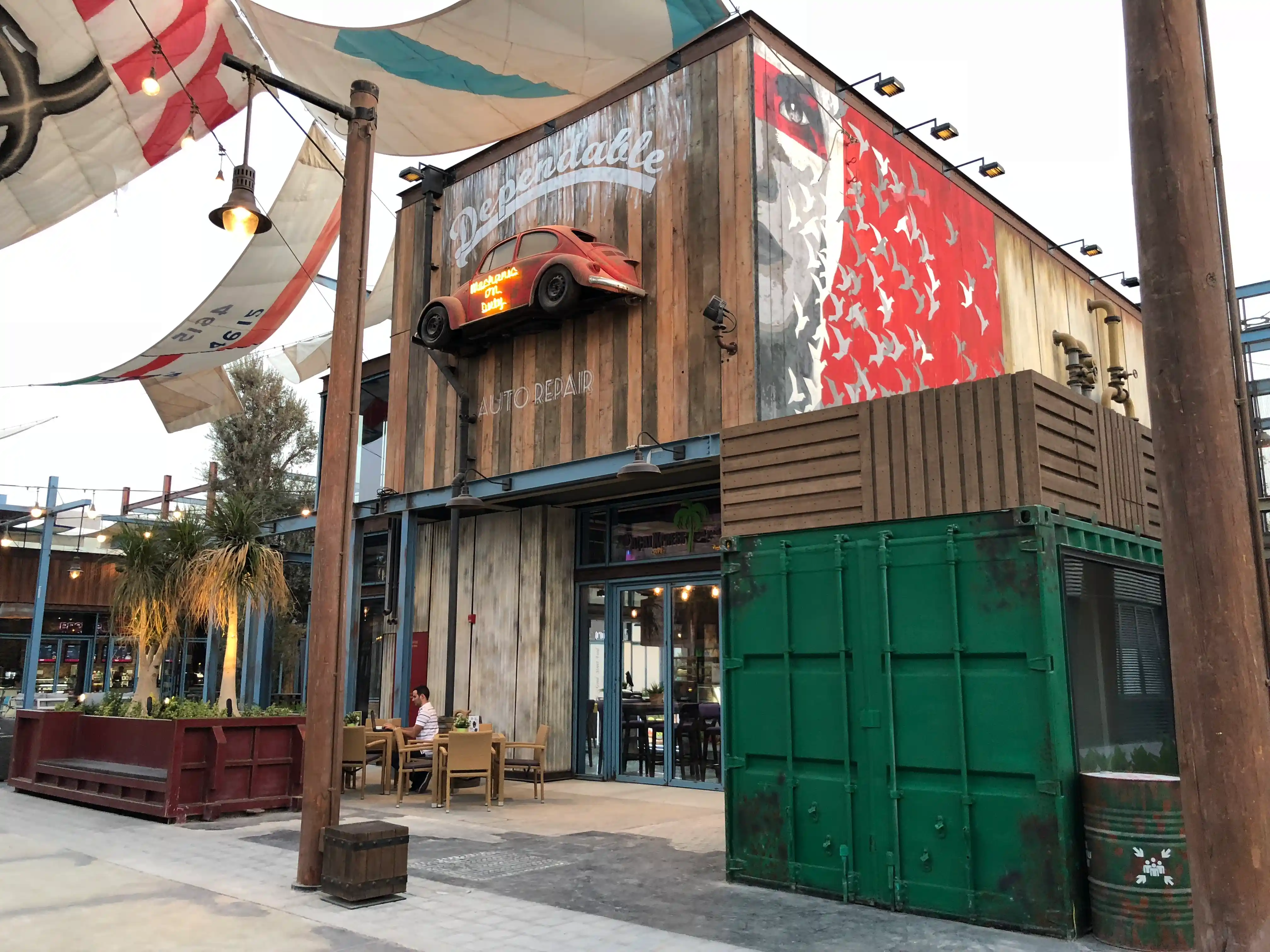
Narrative gives public art a reason to belong
A place becomes more distinctive when its elements feel connected to something deeper than visual preference.
That connection may come from landscape, history, community, industry, movement, material culture, contemporary life or the future ambition of the development. The relevant source will vary from project to project.
Public art strategy should identify which narratives have enough meaning to shape creative direction and which are too superficial to carry the identity of the place.
This does not mean every artwork needs to explain a story literally.
Narrative can influence material, scale, participation, pattern, form, technology, sound, light or the relationship between an artwork and its setting. The connection may be immediately legible or deliberately subtle. What matters is that the creative direction has a reason to exist there.
The alternative is familiar. A theme is selected because it appears locally appropriate, then repeated as imagery or motif. The project can technically reference its context while still feeling generic.
Meaning is not created by applying symbols. It comes from understanding what is specific about the place and allowing that understanding to shape the creative brief.
Detailed cultural research and narrative development deserve their own processes. At strategy level, the essential principle is simpler: research should precede representation.
Cultural relevance cannot be added at the end
Public art often carries expectations around culture, community and local identity. Those expectations make strategy more important, not less.
Culture is neither a visual library nor a collection of motifs waiting to be selected. It includes lived experience, memory, language, values, change, contested histories and different interpretations of the same place.
When projects move too quickly towards representation, cultural references can become superficial or tokenistic. The intention may be respectful while the outcome still reduces a complex context to the most recognisable image.
A public art strategy should establish how cultural knowledge will inform the programme, where specialist research or consultation is required and what subjects demand particular care.
It should also recognise that cultural relevance does not require every commission to look historical or traditional. A place can be rooted in context while supporting contemporary expression.
The objective is not to reproduce the past. It is to give artists and project teams enough understanding to create work that belongs to this place rather than almost any place.
Landmark value is about recognition, not just size
Public art can also play a practical role in how people recognise and remember a built environment.
A distinctive intervention can mark an arrival, identify a gathering point, distinguish one zone from another or become part of the mental map people build as they move through a development.
That makes public art relevant to more than visual character. It can contribute to orientation and place recognition when it is coordinated with the spatial experience.
The strategic distinction here is important. A landmark is not simply a large object.
Landmark value depends on context, visibility, contrast, location, sequence and memory. An intervention hidden from important approach routes may be physically substantial but experientially weak. A smaller piece positioned at a critical threshold may become far more recognisable.
Public art strategy should therefore consider where memorable moments are needed across the journey and what role each might play.
Detailed landmark hierarchy and placement require deeper analysis, but the principle belongs in the public art strategy from the start. Art should not compete randomly for attention. Its moments should relate to the structure of the place.
Development differentiation comes from specificity
Many developments pursue similar qualities: memorable, distinctive, authentic, connected and culturally relevant.
Those qualities cannot be achieved simply by adding unusual objects.
If the same artwork could be moved to another city, resort, district or development with little loss of meaning, its contribution to place differentiation is limited.
Specificity is more difficult to replicate.
It can come from an artwork's relationship with a site, a local material, a particular view, a piece of cultural knowledge, an environmental condition, a community story or an experience that exists only at that location.
This is where public art can contribute to development identity without becoming a branding exercise.
The most useful question is not whether an artwork looks distinctive in isolation. It is whether it makes the place itself more recognisable.
For developers and asset owners, that distinction has commercial relevance. Places compete for attention, visitation, occupancy and memory. Public art can contribute to that position, but only as part of a wider experience and identity system.
It should not be expected to manufacture value on its own, and unsupported claims about financial return are unhelpful. Its strategic value is that it can strengthen the qualities through which a development becomes identifiable, meaningful and easier to remember.

Strategy should come before artist commissioning
A project loses options as design advances.
Once architecture, landscape, structure, circulation, lighting and technical systems are fixed, public art has fewer opportunities to become genuinely integrated.
The commission may be forced into whatever locations remain. Structural requirements may restrict scale. Power or data may be unavailable. Sightlines may have changed. Maintenance access may conflict with the preferred location. The most meaningful arrival point may already be crowded with other project elements.
At that stage, the artwork is being asked to solve a problem created by timing.
Early public art strategy allows the team to identify important opportunities while they can still be protected.
It can inform spatial allowances, structural coordination, sightlines, lighting principles, access, servicing and the relationship between art and landscape. It can also help budgets follow priorities rather than being spread evenly across locations of unequal importance.
This does not mean selecting artists at concept stage or fixing creative outcomes too early.
It means making the strategic decisions that allow strong creative work to happen later.
I see this as one of the central distinctions between public art procurement and public art strategy. Procurement can secure an artwork. Strategy creates the conditions for that artwork to matter.
A collection of commissions does not automatically become a programme
Large developments may contain multiple artworks delivered over several phases, plots or appointments.
Without a strategic framework, those commissions can drift apart.
One team may prioritise spectacle, another heritage, another technology and another decorative enhancement. Each decision can appear reasonable within its own package while the overall development accumulates unrelated gestures.
A public art strategy provides continuity across those decisions.
It can define the purpose of the programme, establish broad opportunity types, identify relationships between major and supporting moments, set principles for cultural relevance and help future commissions respond to a common place identity without requiring them to look alike.
Consistency should not mean repetition.
An effective programme can include very different artists, media, scales and forms. What connects the work is not necessarily a visual style. It is the relationship each commission has with the larger idea of the place.
That distinction becomes particularly valuable on long programmes where design teams, consultants, operators and stakeholders may change over time.
The strategy becomes a reference point for deciding whether new opportunities strengthen the intended experience or simply add another object.
Delivery decisions can protect or weaken the original idea
Strategic intent has little value if it disappears during delivery.
Public art interfaces with architecture, landscape, structure, lighting, electrical systems, digital infrastructure, accessibility, safety, maintenance and operations. Decisions in any of those areas can materially change the way an artwork is experienced.
A prominent location may become obstructed. Lighting may flatten rather than reveal a piece. Landscape growth may alter important sightlines. Maintenance requirements may make an apparently ideal installation impractical. A technologically ambitious artwork may become difficult to operate if ownership and support are unclear.
These are not reasons to reduce artistic ambition. They are reasons to coordinate it properly.
A public art strategy should establish enough delivery logic to make later decisions coherent. More detailed masterplanning, commissioning, procurement and governance can then develop the programme without losing its original purpose.
The strongest public art strategies are therefore neither purely conceptual nor purely technical. They connect meaning with the realities required to realise and sustain it.
What clients should establish before commissioning artworks
Before individual commissions begin, a client should be able to answer a set of strategic questions.
What should public art contribute to the identity and experience of this particular place? Which cultural, historical or contemporary contexts should inform the programme? Where across the human journey can art have the greatest effect? Which opportunities should become major landmarks and which should support quieter moments of discovery? How should different commissions relate without becoming visually repetitive? What architectural, landscape, operational and technical decisions need to be protected now so that future artists have meaningful opportunities later?
If these questions remain unresolved, an artist brief may be premature.
A strong brief should not ask an artist to invent the project's entire cultural position, solve an unclear place identity and compensate for spatial decisions that have already been fixed. It should give the artist a clear strategic context and enough freedom to make an original creative response within it.
That is a better foundation for both the project and the artist.
Public art should change how the place is understood
The test of a public art strategy is not how many artworks a development contains.
It is whether those interventions contribute to a place people can recognise, understand and remember.
That requires more than aesthetic quality. It requires purpose, context, narrative, cultural intelligence, location, hierarchy, integration and delivery to work together.
Decoration begins with the question of what can be added.
Strategy begins with the question of what the place needs.
When public art is approached that way, it can become part of the identity of the built environment, support moments of recognition and orientation, make local meaning visible and create experiences that belong specifically to their setting.
The artwork still matters enormously.
But the quality of the object is only part of the achievement. The larger opportunity is to make the relationship between art, people and place equally deliberate.